Showing posts with label Italy. Show all posts

Thursday, 25 August 2022

The Six Nations waste potential to power rugby's growth

[This is a follow up post to a previous one about how the RWC has been the main driver of global growth over the past 20 years]

One may look at Italy and their results over the past 9 years and ask "How has being in the Six Nations helped them? They constantly lose". It is not often you see this point made, but in actual fact Italy has benefited MASSIVELY by being added to the Six Nations.

To understand this properly you need to think of the counterfactual where Italy were ignored by the Six Nations and remained a "Tier 2" side in the REC. In this hypothetical world all the following things would have most likely been different:

  • They would not have the annual budget of all the top five REC sides Georgia, Romania, Spain, Portugal, & Netherlands combined.
  • As a result not had the money for professional teams in the URC.
  • More often played at far smaller stadiums with far smaller crowds.
  • Not had the money to invest so much in improving what was a weak youth system.
  • Nor the regular international competition for that youth to test themselves.
  • Nor would they have the full 3 votes on the World Rugby Council.
  • Selection would have less consistency and involve more negotiation with clubs.
  • Nor would have they been able to select anywhere near the level of foreign imports and heritage players they have managed to get available over the years (over the 2003-2013 period this was a high percentage of their most significant players).
  • And may have very likely got caught fielding ineligible players and like Spain got booted out of a RWC by Russian sleuths if they played in REC too.

It is true Italy's wooden spoon collection has hardly made them the ideal example of how entry to the Six Nations can grow the sport. But that is only if you ignore what the Six Nations prevented them most becoming: a mid-table REC side probably 5 or 6 places lower in the rankings than they are today and without the ability to invest so much in improving youth.

The more you think about this. The more totally obvious it becomes. Of course Italian rugby is much better and richer than it would be otherwise outside the Six Nations. It is for this reason any suggestion they voluntarily put their place at risk in a relegation playoff is a non-starter.

Despite many losses Italy's participation in the Six
Nations has still boosted their level immensely.
Sadly for the sport though few appear to have properly understood this and been able to follow the logical implications of how spreading some of those same benefits of the Six Nations to others would grow the game on the rest of the continent. Instead after every bad result over the last 8 years we have more often heard useless talk of kicking Italy out of the Six Nations (a truly terrible idea that would risk setting them back years).

People now just assume if Georgia or Portugal were added to the Six Nations they would just be another Italy. However much like when the RFU wanted to exclude both those nations from the 2007 World Cup. This is a hopelessly short termist growth killing viewpoint.

Instead what they should be thinking is: "Georgia and Portugal are pushing Italy hard to close and exciting competitive games despite having only a fraction of their budget. Imagine how much more they could grow if the Six Nations opened its doors and they were able to get considerably more funding and experience".

Also: "Spain got a crowd of 40,000 for an exhibition game. There is huge growth potential there. Imagine how much stronger they could be with the budget to maintain a more consistent selection and retain homegrown players like Lucas Paulos and Samu Ezeala. Plus add heritage players the level of Joris Segonds or Rémy Baget like Italy has always been able to do with the likes of Parisse and Castrogiovanni, or in more recently Polledri and Capuozzo".

Lamentably though it is doubtful any thoughts along those lines crossed the mind of a single one of the Six Nations blazers this summer. And that is why the sport struggles to grow.

Georgia and other REC nations compete with a
fraction of the budget of Italy and other "Tier 1". 

Instead of encouraging and inviting growth. The vague alternative idea seems to be that "Tier 1" plays "Tier 2" occasionally in friendlies. And for a team like Georgia to ever join the Six Nations they must follow the same model as Italy and work their way into the tournament through a few wins in those friendlies until they can no longer be ignored (it is sort of the libertarian "pull yourself up by your bootstraps" line of thinking).

This idea basically means Georgia (or any other REC side) is asked to beat Six Nations sides despite having a fraction of the budget, a fraction of the professional player pool, a fraction of the top level experience, and those occasional matches when they happen most often being played away from home.

Unfortunately some clueless people think this is the best and most efficient way to grow the sport. Instead of expanding the Six Nations and enabling them to build a better budget, player pool, and experience to be able to compete. They are asked to perform a miracle only possible with a one off "golden generation" (which would then be wasted as they'd have spent entire careers playing those friendlies and be retired by the time they ever got into the tournament).

When discussing Georgia and the Six Nations. You will commonly hear something along the lines of "yeah, they should get chance of some more "Tier 1" games, but not the Six Nations". Whilst on the surface this may sound supportive, in reality it maintains the vastly uneven playing field and is basically just fobbing them off. Anyone who repeats that line with no plan of Six Nations expansion attached is not genuinely serious about growing the sport.

Expecting teams to repeat Italy's early professional
era wins over Five Nations sides is unrealistic and
ignorant of how international rugby has changed.
(Note: The comparison to Italy c.1997-98 is utterly flawed for another reason. In those barely just turned pro years of the sport. Scotland (at home) could lose 68-10, France (at home) could lose 52-10, and Wales could lose 96-13 versus South Africa. Ireland (at home) could lose 63-15, England could lose 64-22, and Argentina could lose 93-8 versus New Zealand. Never in the history of the sport was the gap between 5N and SANZAR bigger. Nowadays the international landscape is totally different. It is simply not a fair comparison for example to compare Georgia playing Ireland in 2022 to Italy playing Ireland in 1997).

Expansion can be in the interests of "Tier 1" too

Obviously expansion to the Six Nations should be in the interests of every REC nation and anyone who genuinely cares about growing the sport (a lot of fans may say they do but when it comes to applying the necessary changes needed very clearly don't).

But there is another reason why expansion and involvement of "Tier 2" in big events ought to be in the interests of "Tier 1" instead of just playing "Tier 2" in friendlies.

Anyone who has followed rugby long enough should know vaguely supportive promises of "more games for Tier 2 between World Cups" are far from reliable. In 2017 World Rugby pledged to increase "Tier 1 vs Tier 2" matches by 39% over 2020-32. However pretty much the status quo remains (four SANZAAR sides play four of the Six Nations sides on a July/November weekend with the two left over Six Nations playing a "Tier 2" nation).

Reason for little change is obvious. Those friendlies are on some level fundraisers. The biggest draws are the biggest brands (ie All Blacks). When it comes down to it, no "Tier 1" side is volunteering to play two rather one "Tier 2" side in November. For matches involving less established teams to attain high commercial value it requires attachment to a big brand event.

A perfect example of this is the last three matches between Fiji and Uruguay. Despite being one of the lower profile games shifted to midweek, in 2015 and 2019 the fixture sold out stadiums in both Milton Keynes and Kamaishi which were broadcast to global audiences on TV. By contrast in 2018 they played a November friendly at Hartpury College and the crowd was in three figures and only streamed on YouTube. Many of those fans did not come for Fiji vs Uruguay specifically. They came to see the RWC.

Ireland vs Romania sold out Wembley to set
the record crowd of 89,267 for a RWC match.
Similarly in 2015 when we saw Ireland vs Romania sell out Wembley to set the RWC attendance record of 89,267. It was not Romania that were a huge draw per se. Again it was the RWC as an event that sold.

The Six Nations as an event has a similar effect in selling the matches involving a somewhat lower profile team in Italy. We can see this by comparing the fixtures involving Italy in the Six Nations and the exact same fixtures when played as friendlies in RWC warm ups.

2003 RWC warm ups:
25,000 vs Scotland in Edinburgh (20,000 fewer than previous fixture in the Six Nations)
14,000 vs Ireland in Limerick (35,000 fewer than previous fixture in the Six Nations)

2007 RWC warm ups:
14,000 vs Ireland in Belfast (35,000 fewer than previous fixture in the Six Nations)

2011 RWC warm ups:
20,000 vs Scotland in Edinburgh (22,000 fewer than previous fixture in the Six Nations)

2015 RWC warm ups:
10,000 vs Scotland in Torino (56,000 fewer than previous fixture in the Six Nations)
43,000 vs Scotland in Edinburgh (19,000 fewer than previous fixture in the Six Nations)
52,000 vs Wales in Cardiff (14,000 fewer than previous fixture in the Six Nations)

2019 RWC warm ups:
30,000 vs Ireland in Dublin (21,000 fewer than previous fixture in the Six Nations)  
25,000 vs France in Paris (25,000 fewer than previous fixture in the Six Nations)
50,000 vs England in Newcastle (32,000 fewer than previous fixture in the Six Nations)

Some of those crowds are good (50,000 in Newcastle or Cardiff). But still on average across those 10 friendlies Italy games sold 28,000 fewer tickets per match at presumably lower prices and lower TV rights than they did in the corresponding Six Nations fixture. The largest effect is seen in Italy itself, who attract far better numbers for the Six Nations than friendlies.

To be fair "Tier 1" Six Nations sides (besides Italy) get quite healthy crowds these days hosting their annual "Tier 2" fixture in November, but those matches are still obviously of much higher commercial value as part of big events than friendlies.

If the Six Nations would be willing to think long term there is also the larger potential future pay off in creating more competitive teams with bigger fanbases, and having a tournament with more matches to sell, which allows for more possible exposure for sponsors and larger TV deals. The modern day RWC has grown more lucrative as an event for these reasons and Six Nations could too. "Tier 2" growth should not have to come at expense of "Tier 1".

Conclusion: Six Nations has huge potential power to grow the sport in Europe that it is wasting. As seen at the RWC, most growth comes from expanding major tournaments, not from friendlies.

"Tier 1" blazers take the view that the big mid-RWC events must ultra exclusive to themselves, and they will "grow the game" with the odd friendly. This gets it totally back to front. It is the big events that make the biggest impact in growing the sport and should aim to be inclusive. Then you can leave sides to organise friendlies and three match test series mostly as they please.

For rugby to grow, and one day fully shed its "Tier" tags, it is crucial that its administrators open their minds to the idea of expansion of the major mid-RWC event. There are huge potential gains to be made throughout the continent from an expanded European Championship event (maybe once every four years similar to football). Especially for all those labelled "Tier 2" of course, but long term also "Tier 1" as well.

It is incredibly frustrating the Six Nations with their total lack of vision and desire for growth fail to see this. European expansion should be seen as a great opportunity for the sport, where unlike the USA there is a more open niche available for full contact team sport, but it gets ignored and wasted as "Tier 2" sides remain asked to compete at enormous financial and competitive disadvantages in perpetuity. Rugby has to look at where successful examples of growth have come at RWCs and apply those lessons to their other major events.

Video: Everything Georgia captain Merab Sharikadze says here is spot on. "Rugby must be more open".

Wednesday, 17 August 2022

Why World Rugby should investigate Italy eligibility revelations

Martin Castrogiovanni is one of 8 former Italian players to suggest
  in interviews his link to Italy was only via great-grandparent
This month question marks arose over the eligbility of at least 8 former Italy internationals. The biggest name among them was Martin Castrogiovanni, a legendary figure at tighthead for the Azzurri who won 119 caps and played across four RWCs. The others were Gonzalo Canale, Santiago Dellape, Ramiro Pez, Gonzalo Garcia, Carlo del Fava, Luciano Orquera, and Alberto di Bernardo (in addition to that there were also further cases in Italy A bringing the total of question marks up to double figures).

The error in all these cases was the same. In 2018 Belgium were found to have fielded half a dozen players who mistakenly confused having citizenship via great-grandparents with being eligible which they were not. Italy basically seem to have done the same thing repeatedly over the first decade and a half of the 21st century.

It should be noted that, whilst interviews seem suggest the likelihood (unless more information proves otherwise) is that at least some of these players were probably not eligible, disappointingly we will probably never know for 100% certain sure as World Rugby and FIR have refused to show any interest.

World Rugby's reaction has been shared among a few similarly uncurious "Tier 1" fans (by contrast fans of teams who were more effected such as Spain seem very interested). After all the players are from the previous generation and now retired. So why care?

There are in fact quite a number of reasons this issue is worth World Rugby investigating more ....

Firstly just for the pure interest in knowing more about rugby history.

Between them these players won 459 caps for Italy. All but one of them (di Bernardo) had substantial 40+ cap international careers. So together they were a considerable part of this Argentine infused era of Italian rugby. If the players were confirmed not eligible it would add context to this period of Italian rugby history and we would reflect on it slightly differently. An era that was not only heavily reliant on Argentines for competitiveness, but also through weak appliance of eligibility laws.

It would be interesting to know if these allegations are true or not just for the sake of knowledge. Even if time has passed so nothing can be done. Just as somewhat similarly it would be interesting to know if any truth to the whispers South African players were doping in 1995 (or any other time). Even if nothing can be done now. This stuff is interesting to know and relevant to how we look back on rugby history. Nobody should want the issue left at just question marks.

Secondly if players were not eligible it impacted several "Tier 2" nations.

In 2002 Castrogiovanni and Dellape both played in RWC qualifiers. This should have disqualified Italy (as it did Russia in the same set of qualifiers) and seen Spain reach the RWC in their place. In 2006 Pez and Del Fava also both played RWC qualifiers. This also should have disqualified Italy and seen Portugal reach the RWC in their place (with Russia then facing Uruguay in the Repechage playoff).

Qualifying to the RWC is a big deal for these nations. The failure to catch it at the time cost 60 players a possibly once in a career chance to play at the sport's biggest event. Furthermore Italy also fielded the players at the tournaments themselves which after 2007 saw them auto-qualify through third place in their pool. So this system means that Italy still benefit from those non-eligible players through having boosted seeding and better pool draws at RWCs continuing right to today.

"Tier 2" sides missed RWCs and possibly
on historic wins due to Italy's alleged
ineligible players all escaping notice
Obviously you can't retroactively go back in time and disqualify a nation. But those nations effected still deserve to know the truth, and there is a case they should even get some small compensation (maybe this could come from Italy paying the same fines for eligibility mistakes that Spain had to pay).

Also in this period there were some close games between Italy and "Tier 2" nations which possibly cost some historic wins. At the 2007 RWC for instance, in a close match vs Romania decided by just 6 points, one of Italy's tries came from Pez kicking through for Dellape to score (both players maybe ineligible). In 2003 they also beat Canada by just 5 points with ineligible players. In the warm up before that tournament they also had possibly four ineligible players in the starting XV when they beat Georgia by 9 points.

Thirdly plenty of Italian players impacted too.

Whilst Italy's level as a national team in this era benefited from all these players. It did not benefit all the dozen or so Italian players who missed out hundreds of caps on between them. For some of those players representing Italy would have been a childhood dream lost. Again it can't be fixed now, but those players still all deserve to know the truth of whether or not they were denied their place rightly.

Also another interesting counterfactual to consider. It is widely considered the Argentine boost to Italy in the era of roughly 2003-2013 covered up the fact their homegrown youth teams were performing poorly and producing relatively few players. Something that later got badly exposed as this generation declined or retired and there were fewer Argentines to call upon (partly thanks to Argentina starting to mass cap all their young players in South American tournaments throughout the 2010s).

In recent times Italy has fixed their weak youth setup and this year was their strongest U20 side yet. It will not happen overnight but in longer term there is a bright future for Italian rugby. If they had not had so many Argentines in the previous era though would have they been forced to address this earlier?

Fourthly World Rugby need to examine how this went so unnoticed.

Some of these cases were not particularly hidden. Carlo del Fava even stated his father and grandfather were both born in South Africa and his link to Italy only comes via great-grandfather on the official Six Nations website of all places!

Spain got exposed by a level of eligibility
scrutiny from rival nations that does not
appear to exist elsewhere in rugby
This in complete contrast to the recent case with Spain, who only saw Gavin van den Berg exposed after a Russian sleuth browsed for two years worth of Facebook posts (and Spanish fans then in turn searched through three years of Jason Tomane's Instagram feed to find an accusation which was later found to be okay with an exemption). If that level of Russian sleuthing existed in 2006 it might have got them to the World Cup ....

But why does it appear the only serious scrutiny to the eligibility status of players come from the rivalries of REC nations engaged in fiercely contested RWC qualifying process? Should not the sport's governing body start to take more responsibility itself and be a bit more thorough in its checking process to stop these mistakes ever happening in the first place?

It would not surprise in the least if there have been several more instances of mistakes in eligibility that have escaped any scrutiny. This includes possibly some big name players in "Tier 1". World Rugby owes it to the sport to investigate how and why (if the allegations are confirmed true) there was such a failure in their eligibility checks that went unnoticed across so many years and to stop it happening again.

Tuesday, 29 January 2019

Is there a worthwhile future for the REC clubs in the Challenge Cup?

Prior to 2014 the Challenge Cup featured six clubs outside the three main European leagues. This was a point of frustration for many as there was a feeling they were selected poorly. They included four Italian clubs along with two others, the Bucharest Wolves, along with often a mid table Spanish side as the top side didn't have the money or desire to compete, or for one season a Portuguese selection.

For selection sides like Bucharest Wolves assembling with little preparation for two week blocks to take on much more cohesive club sides was not ideal. The Spanish side wasn't even the best in Spain. Whilst Georgian and Russian representation was being omitted despite usually beating Iberian opponents internationally and the latter clearly having some stronger clubs than those that were competing.

Meanwhile the Italian clubs were remarkably poor. Calvisano were the Italian league champions in 2013/14, yet still lost home and away to the Bucharest Wolves. Even Bizkaia Gernika in 2012/13, despite qualifying on the back of a sixth place domestic league finish still beat Rovigo home and away.
Image result for Енисей-СТМ
Enisey-STM players celebrate their
win 19-12 over Worcester in 2016

The change in 2014 which introduced the Continental Shield and opened up the Challenge Cup to a meritocratic qualifying basis was much welcomed. However it hasn't quite turned out as has hoped.

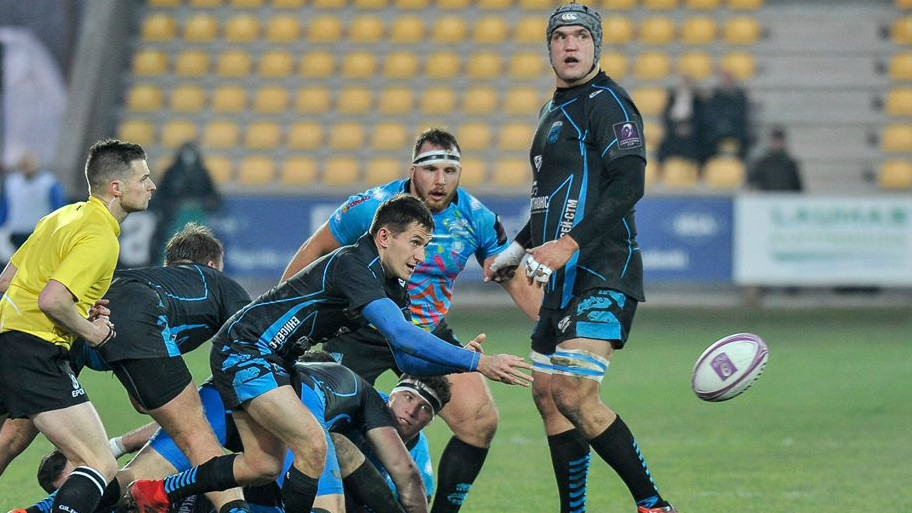
Initially the Russian clubs which were full of internationals and strengthened by experienced players from across Eastern Europe backed up what many had thought. In their first European campaign in 2015/16 Enisey-STM took two scalps from major leagues in Brive (10-7) and Newcastle (24-7). Away trips were trickier, their worst loss was 55-7 in Newcastle, but in light of this season you would take that as a worst result.

The following season they also beat Worcester (19-12) and the Dragons (38-18), whilst only had one loss over 40 pts in their last match away to Worcester (57-14). Their average scoreline over the first two seasons was 14-32. They were winning more often than they conceding over 50+ points.

This was in the context of being new and inexperienced in the competition and with the disadvantage of playing matches in what is their off season and some of the "home" matches being played miles away in Sochi. It was hoped this could be a platform to potentially continue to achieve more credibility and experience on the European stage over the following years.

That has not happened though and their fortunes in the 2018/19 season took a dramatic nosedive. Instead of conceding 50+ pts just once a season, they conceded over that in every match bar one, with even Zebre thrashing them. Whilst they took some scalps in the matches hosted in Russia initially, this season they lost 82-21 to La Rochelle and 65-9 to Bristol. Finally their campaign finished atrociously conceding 17 tries in a 107-19 slaughter in Bristol after an early red card.
Image result for timisoara rovigo rugby
Timisoara beat Italian clubs with ease
to qualify for the Challenge Cup in 2016
but their time actually in the competition
has ended up being utterly forgettable

Meanwhile Timisoara who also at the time had several experienced internationals looked in the qualifying competition like they could possibly perform similarly to Enisey-STM. They were beating Italian clubs in the Continental Shield by clearer margins than the Bucharest Wolves did. Rovigo and Calvisano were the top two teams in the Italian league in 2015/16 and the Romanians beat the former 45-13, and the latter twice home and away over two legs 64-40.

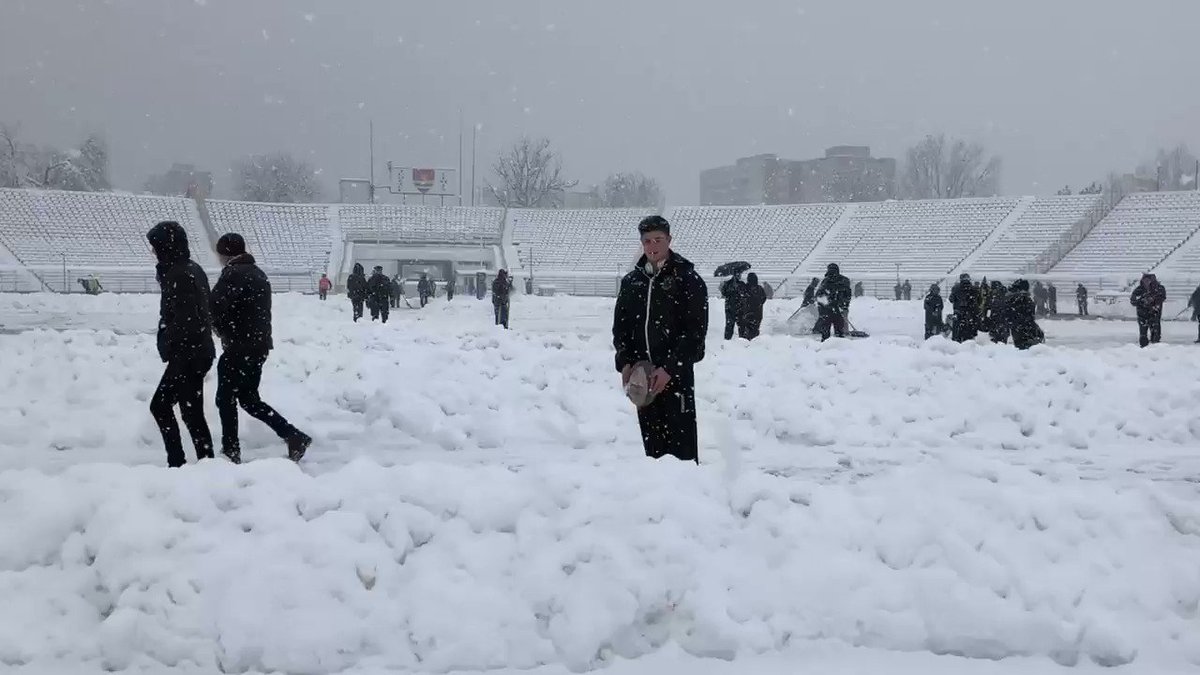
Unfortunately once they reached the Challenge Cup in 2016/17 Timisoara did not at all fare well. Not only were results bad, but they ended up with a sizeable fine for a cancelled match due to snow. There has only been bad news for the club ever since then, with talk of unpaid players and low morale, their main backer reducing investment, and players have been leaving.
Image result for timisoara snow rugby
The snowy pitch that cost Timisoara
yet another €30,000 fine from EPCR

They couldn't qualify for the 2018/19 Challenge Cup on merit getting knocked out by Heidelberger RK, but got through after the Germans were kicked out for ownership conflicts. It was widely expected that they would struggle badly, but in getting hit by yet another fine for a snowy pitch, and then taking 59-3 and 111-3 humiliating hammerings against the Dragons and Bristol it still managed to be a total horror campaign even despite the incredibly low expectations.

The Italians incidentally in the Continental Shield have also done much to alter the view of how having four of them in the old format was certainly not selecting the best possible teams. In the 2016/17 tournament Enisey-STM beat Mogliano 97-7 over two legs, whilst Krasny Yar beat Mogliano 48-24, and Rovigo 42-11. Even German champions Heidelberger RK could beat the Italians and in the 2017/18 season scored wins over the both the top two clubs (Petrarca Padova and Calvisano).

Whilst the Continental Shield also initially seemed a good concept, it has been underwhelming. If you look at the EPCR site you could be forgiven for not realising it existed given the little attention it gets. It has been cut down in size with clubs from Spain, Portugal and Germany all withdrawing due to (likely) financial reasons and possible lack of desire to really compete at Challenge Cup level.

This year there were only two competitors outside of Italy in the Continental Shield, and one of those (a selection side from Belgium the "Belgian Barbarians XV") was hardly prepared at all and was a bit of joke getting annihilated 68-12 and 89-7 home and away to Rovigo.
Image result for enisey stm bristol
The reported crowd at Enisey-STM
vs Bristol at Sochi was a mere 100

These recent results call into question whether there is worthwhile future for the Continental Shield and teams outside the main three European leagues competing in the Challenge Cup right now.

If there was more money to be made either from TV, sponsorship, and a growing fanbase from competing then this would be a non-question. However there does not appear to be much evidence this is the case given the amount of teams who have withdrawn from the Continental Shield. Enisey-STM playing in Sochi drew an attendance reported as small as 100 and was not televised. The probability that Challenge Cup participation right now is a loss maker for these clubs is pretty high.

Image result for Timisoara Northampton
Timisoara's 111-3 annihilation against
Northampton may be the last we see of
them competing in the Challenge Cup
For now it is hard to see any real point from the Romanian perspective at least to continue putting resources towards a series of thumpings and fines for snowy pitches. This is particularly relevant for a club like Timisoara who have reportedly been struggling to pay players and seem in little position to either produce or recruit the amount of talent to compete.

Some have suggested a return to the selection squads like Bucharest Wolves. They were not great (average scoreline in their 2014/15 campaign was 44-13), but at least did not suffer to the degree Timisoara have and get fines for snowy pitches. But again given the state they are in frankly Challenge Cup should not be the priority for Romanian rugby right now. There is also a reasonably strong chance such a side would be much worse in 2020 than they may have been 5 years ago.

As for the Russian clubs their downfall has been slightly more puzzling given a lot of their team getting thumped this season are the same players who were a lot more competitive only a couple years back. However one possibility is fact they are mostly the same team could be part of the problem.

They are not lacking experience, but the core of their squad looks very old and could just be over the hill now at this level. They went into each match this season with a starting XV with an average age of 30 or 31. Half of the XV against Zebre is aged over 32 with a handful veterans over 35.
Image result for enisey stm zebre
Enisey-STM have an ageing squad with
an average of 31 that has barely changed
from their debut Challenge Cup season

At that age a couple years difference can be noticeable and several of those players are probably nearing retirement. This is a side 3 or 4 years older than the average professional team, the rotational Bristol team that pasted them had an average age over 5 years younger.

This brings us onto a similar theme. It has escaped so much attention as Romania as it has not to the same degree or been as badly exposed, but Russia too over the past few years have also had a relatively poor time of late at junior level and been struggling to find the quantity of new young talent from those sides to come through and been relying on a core of older players.

Hence why at national team level they were giving a debut to a 34 year old scrum half (who was the 17th member of their U21 side of 2004 of which remarkably 8 players were still active in 2018). Also possibly hence why we see Enisey-STM enter the Challenge Cup this year with what is an ageing squad that has still barely changed since they first entered the competition back in 2015.

Again to reiterate the situation for Russia is not as dismal as it is for Romania but the general theme remains the same. They have neither been able to produce the level of talent to feed into their domestic teams, nor have they been able to recruit it from overseas either.

So what about the teams that have been considerably more successful in producing talent?

Georgia are notably the clear standouts in this regard, but it's also clear their domestic setup is not producing teams to the level to be competitive at the Challenge Cup. The Didi 10 champions from last season Lokomotivi Tbilsi have recently been playing in the Continental Shield against Italian opposition. Three of four matches those were close contests. If they were going to be competitive at the higher level that opposition would pose no problems.

Obviously the Georgian the domestic level is likely to be weakened with a considerable number of their players abroad, but that doesn't tell the whole story though due to the large percentage of those being props. There still actually remains some decent young talent which is feeding into the Didi 10. We saw this with the U20s and in the upset from the young fully Georgian based Georgia XV team vs Argentina XV in the summer (which didn't even include many domestic based international squad members).
roarse
Unlike some other leagues, there has not
been a really dominant team in Georgia
with the top talent spread across clubs and
5 different regular season winners in 5 years

But there has not been a really strong club side in Georgia owing to how dispersed across the Didi 10 that talent is. There are no one or two teams who stockpile the best talent and dominate unlike some other leagues. In November there were 8 domestic based players in the squad across 6 of the teams. Over the past five seasons five different teams have topped the regular season table.

That is in complete contrast to Romania and Russia in recent times. The SuperLiga final has been Timisoara vs Baia Mara in five of the past six seasons. In Russia it has been Enisey-STM vs Krasny Yar for eight consecutive seasons. Also been similar in Japan, up until this year Panasonic and Suntory shared all the past 8 Top League titles between them. That has made their league much more boring, but also meant a side like Enisey (previously at least), or Panasonic and Suntory (on paper clearly the strongest clubs from a Tier 2 nation) can be able to compete with low end clubs in elite leagues.
Image result for Georgia XV rugby
Georgia XV showed there is some talent
in the Didi 10 with their upset win over
Argentina XV in the Tbilisi Cup last year

Also of course need to remember the Georgians have only been having top tier level youth teams for four years. It will take time for that to feed into the depth of the league which has virtually zero overseas recruitment to boost it. Although clearly the fact they continue to produce a good level of talent, puts them in a better position to potentially field a reasonable side in the competition in future if not yet.

The other REC teams to consider are the Iberians, who both remain largely amateur, and in some cases lack ambition, and have been reluctant to compete in Continental Shield with the costs involved.

A bit of talk has happened in Spain about forming a more professional league. However for now mentions of professionalism is just talk, and they are still miles away from being talked about as possible competitors at Challenge Cup level and the impression you get is don't even want to be either.

So unfortunately being realistic it is hard to see really anybody representative from the REC nations be competitive in the Challenge Cup in the immediate term. The window where the Russian clubs could pick up wins appears to have passed, the Romanians too will unlikely get any better and those have been countries where the strongest REC clubs have come from in recent years. The Georgians maybe have potential upside, but not yet, especially with no club hording all the top players.

Hopefully there will still be a future for REC clubs to be more competitive in the Challenge Cup at some point. It's just right now that seems even more of a long term goal. In the meantime it may be of better use to focus more resources elsewhere with a possible view of coming back when in a stronger position. This season with Timisoara getting fined for snow and embarrassed by Northampton, or Enisey-STM in their off season travelling over 5,000km to Sochi to get thrashed by Bristol in front of 100 people. It simply seems now there is little value in the Challenge Cup for these clubs in just repeating that.

Monday, 10 November 2014

Roundup: November Internationals Week 1

image

A roundup of the weekends international results from a busy weekend of action, which included a mixture of disappointments for some, with pleasant surprises for Tonga and USA.

Thursday, 6 November 2014

Team News: November Internationals Week 1

image

All the team lists ahead of the first week of the November international window, which includes a chance for redemption for Japan and big games for Fiji and Samoa amongst others.

Friday, 25 July 2014

IRB announce Tier 2 November fixtures for 2014

image

The IRB have announced a complete list of fixtures involving the top 18 ranked sides in the world for the November Test window later this year. Some details are still yet confirmed.

Thursday, 26 June 2014

Tuesday, 24 June 2014

Details on European Rugby Challenge Cup qualifying emerge

logos

Finally some details on what the "Qualifying Tournament" for the European Rugby Challenge Cup will likely be appears to have emerged following FIRA-AER AGM meetings in Croatia.

Roundup: June Internationals Week 3

image

A roundup of the weekend's action from the final week of the June window where Samoa kept their status as top Pacific Island, Japan took a Tier 1 scalp and USA ended a long losing streak.

Friday, 20 June 2014

Team News: June Internationals Week 3

image

Team news ahead of the final week of the June test window. Pacific Island and North American bragging rights is at stake, there is also an interesting clash between Japan and Italy. 

Monday, 16 June 2014

Roundup: June Internationals Week 2

image

A roundup of the weekend's action from the second week of June, where Samoa dominate Italy, Canada lost out in controversially whilst there were two other high scoring PNC matches.

Friday, 13 June 2014

Team News: June Internationals Week 2

image

Team news ahead of the second week of the June test window. The Pacific Nations Cup matches continue, whilst 6 Nations Italy and Scotland move onto to face Canada and Samoa.

Team News: IRB Nations Cup & IRB Tbilisi Cup Round 1

image

Team news ahead of the glorified training tournaments the IRB Nations Cup opening in Bucharest on Friday and the IRB Tbilisi Cup opening in Tbilisi this Saturday.

Monday, 9 June 2014

Roundup: June Internationals Week 1

image

A roundup of the weekend's action from the first week of June, which saw Fiji record their first win over a Tier 1 side for 7 years and Japan record an incredible comeback against Canada.

Friday, 6 June 2014

Team News: June Internationals Week 1

image

Team news ahead of the first week of the June test window. All of the Pacific Nations Cup sides are in action, with USA and Fiji both hosting big home games against Italy and Scotland.

Friday, 4 April 2014

IRB confirm schedule for the second IRB Tbilisi Cup

image

The IRB have confirmed the schedule and participating teams for the second edition of the IRB Tbilisi Cup to take place this June. The tournament will give teams the chance to experiment for more important tests to come.

Sunday, 23 March 2014

Tuesday, 11 February 2014

How good were Italy in the 1990's compared to Georgia today?

,

A statement frequently made in regard to Georgia and the topic of 6 Nations expansion is that the Italians were much better at the time they were added to the tournament in the 1990’s. Here we explain why that statement is a highly dubious one.