Showing posts with label Europe. Show all posts

Thursday, 10 January 2019

Rugby in Eastern Europe in a terrible state

The emergence and continued rise of Georgian rugby has been one of the best stories in the sport over the past 15 years. However not only are they somewhat of an anomaly as a nation who went from absolutely nowhere to quickly reach RWC level, but they also buck another unfortunate trend as rugby in Eastern Europe currently seems to be otherwise in poor health right now.

Romania's severe struggles at junior level for the past several years and horrible 2018 have been well documented on this site. But the Oaks may be the most high profile team but are far from alone as several other lower ranked nearby nations have been going through tough times themselves.

Around 5 years ago Moldova looked to be a team on the up with some of the characteristics of a very early Georgia. They started the European Nations Cup in 2000 in the very lowest division playing the likes of Israel and Bulgaria, and rose up the levels and got very near promotion to the REC ahead of Germany in 2013/14, and did so with a big pack which notably included their first two players Vadim Cobilas and Dmitri Arhip to have gone onto have successful careers in major professional leagues.
Moldova have spectacularly crashed
from a World Ranking high of 25th to
now 56th in space of just four years 

To say their fortunes have dipped since then is an understatement as they have turned out to be the Kazakhstan of this current RWC cycle. As a Union they have totally crashed. In 2018 they continued to an ongoing 11 match losing streak, were relegated from the RET, and now in the fourth tier of European rugby they recently lost 80-6 to Sweden (a team they beat 57-8 back in 2014), and their World Ranking has plummeted from a high of 25th in 2014 to currently 56th.

At junior level their results are horrendous as well. Their U20s have not competed in a Rugby Europe tournament since 2015, whilst their U18s last year lost to Hungary (41-5), Israel (31-7), & Croatia (46-0) to rank 27th out of 27 European nations who competed at U18 level (in 2017 they also ranked 29th out 30 European nations who competed at U18 level beating Bulgaria in a last place playoff).

The only positive for Moldovan rugby this past year is an impressive new tighthead prop in Cristian Ojovan achieving a 4 year professional contract at Aurillac. He should hopefully have a good long career for another decade, but you can't expect many more players are likely to emerge into the professional game with the current state the Union is in and some of the continent's worst youth teams.

Meanwhile Ukraine were in the REC as recently as 2012 but have also fallen badly. They went from winning all their games RET in 2015, to losing them all and getting relegated to the fourth tier in 2016.

The most well known Czech player Jan
Macháček with Montferrand in 2001
Another team who used to be in the REC is the Czech Republic who spent six seasons in the competition between 2003 to 2008 with a few players with Top 14 experience such as Jan Macháček, Miroslav Němeček, Lukáš Rapant, and Martin Jágr.

The last of those players retired a couple years ago and saw little coming through to succeed them. After lock Martin Wognitsch left Angoulême in the summer it meant there were no Czechs left in professional rugby in either of the top two divisions in France for the first time this Millennium. Also since dropping out the REC they then were relegated from the RET in 2014, and despite having gotten their place back in 2017 look well set to be relegated again this year.

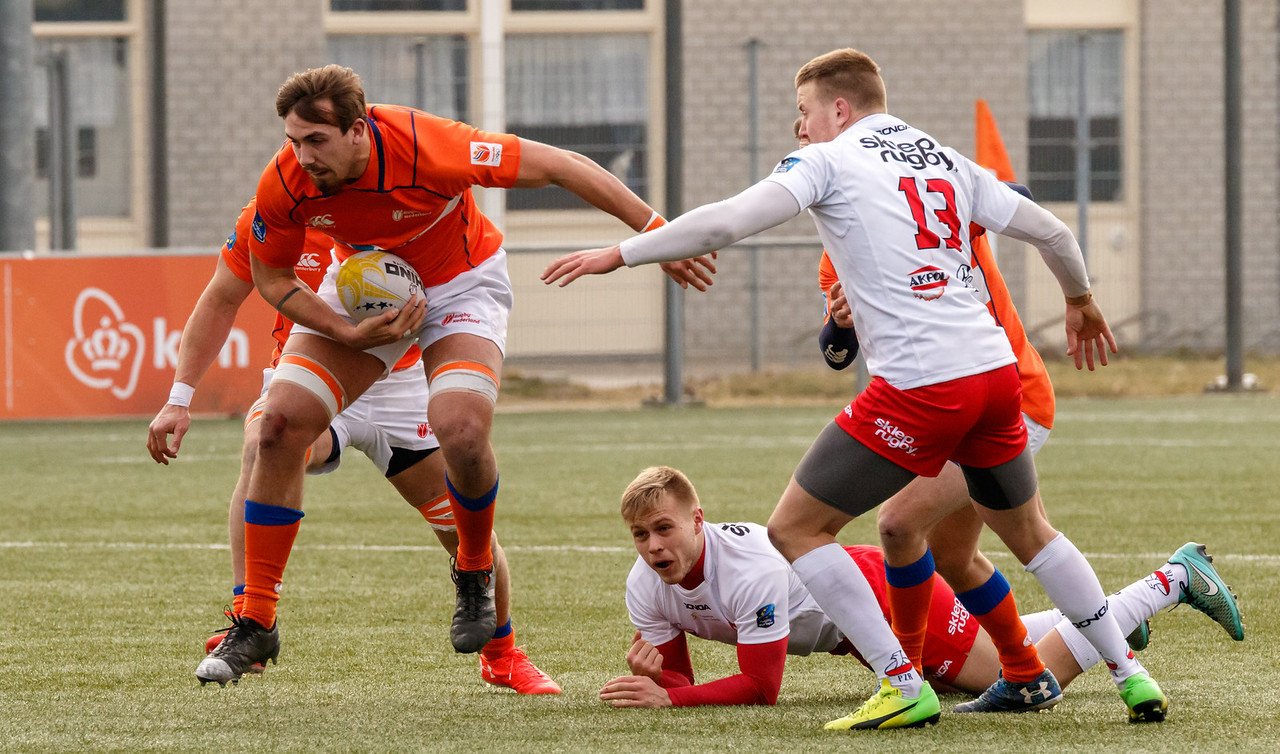
Elsewhere Poland have still not produced another player to feature in a major professional league since Gregori Kacała in the 1990s and do not appear to be a contender for promotion to the REC any time soon. They recently got trounced 49-0 at home by the Netherlands in November.
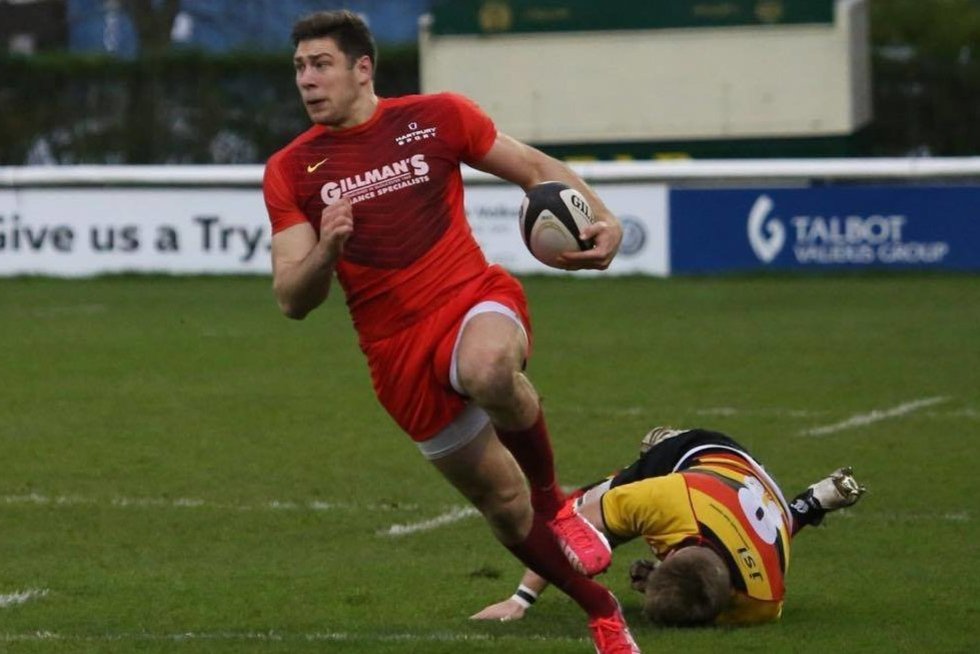
Image result for Jonas Mikalčius
Lithuania wing Jonas Mikalčius had his
career ended by a serious knee injury

In the Baltic states, Lithuania have just seen their star prospect Jonas Mikalčius' career ended at 23 by a serious knee injury soon after he had just earned a move to the English Premiership with Harlequins, whilst Latvia's only pro players Uldis Saulite and Jurijs Baranovs at Enisey-STM are both likely near retirement.

Although there has been some more positive news for rugby in Hungary who had their first ever player to reach pro level this year in Bence Róth with Bourg-en-Bresse in Pro D2.

Whilst Russia for the last few years have not exactly made huge progress or produced a bunch new young players to come through either. Although the mood of course has been changed there since receiving a surprise RWC qualification, which has boosted the Bears as they achieved two of their best results for years against Canada and Japan off the back of it. They will hope to build off an appearance on the sport's biggest stage more successfully than they did post 2011 and improve their production line of talent at youth level (which has not been great but also not as bad as Romania).
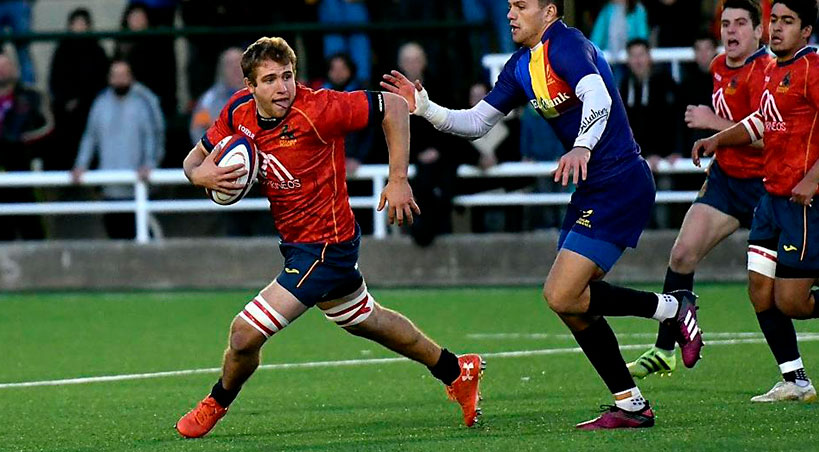
Image result for gonzalo lópez bontempo espana rugby
Spain U20 thrashed Romania 70-6
in a friendly match last month

Overall though East of Germany the picture does not really look particularly positive for rugby in Europe right now aside from Georgia. Most of the other European sides who appear to be making the most progress, certainly in terms of youth development, are all in the West.

Since Georgia U20 have had a place in the WR U20 Championship, it has been the Iberians Portugal and Spain who have been the ones usually playing it out for a spot in the U20 Trophy and look the best at U18. The latter in particular look to be in a better position to potentially see more homegrown talent of the level to play professionally in France in future compared to others. Along with that Belgium and the Netherlands also have improved in recent years into REC or potential REC level teams.

At junior level all those Eastern European RET teams have shown nothing. Romania had an awful year U20 wise yet still beat Ukraine 76-13, who had in turn beaten Poland 42-13 the match before that. Not results offering much encouragement for new players coming through.

It would be great to see a side from Eastern Europe become the "new Georgia" in terms of a 100% homegrown side rising out of nowhere and very meagre resources. However at this point not only is little progress towards that happening, but rugby in some of these nations seems to be in a dire state going backwards. Hopefully entering into a new decade this pattern can somehow reverse itself.

Tuesday, 23 October 2018

Spain lose two homegrown talents to Tier 1 nations in one week

It had looked likely for a while but now it is official. This week Spain lost two homegrown players in lock Lucas Paulos to Argentina and Samu Ezeala to France.

Lucas Paulos (top row third from right) and Samu Ezeala (bottom row on the left) with Spain U18 in 2016
Image result for Lucas Paulos rugby
Paulos with Argentina

Paulos was born in Argentina but moved to Spain with his parents at an early age and came through the ranks at CR Majadahonda. He represented Spain at U16 and U18 level and moved to Mont-de-Marsan espoirs in 2015, but at the end of his first season there went back to Argentina along with Iñaki Mateu to try and see if they could make it in Argentina.

Both made a Pumitas training squad, but ultimately only Paulos made it into the full squad for the World Rugby U20 Championship in June 2017. Mateu instead returned to represent Spain and made his international debut that June ironically against Argentina XV, whose colours he had been wearing only a few months earlier.

Since then Paulos' reputation has grown after returning to the U20 Championship this year and he has been called up to extended 37 man Pumas training squads. However his eligibility was only officially tied to Argentina this week as he played in the Argentina XV side alongside a few other U20 players in the Americas Pacific Challenge.
Ezeala with France 7s

Also this week Samu Ezeala represented France at 7s in a friendly tournament in Cheshire. Given the nature of the tournament which appears to be mostly a practice run ahead of the World 7s Series, it is unclear whether or not these matches are official enough to tie Ezeala to France, but regardless he was wearing French colours and seems to be viewed as a potential 7s player for them.

Ezeala came through at Barcelona Universitari Club, but after another member at the club Jordi Jorba left to play professionally in France decided he wanted follow, and sent his videos out and got accepted by Clermont in 2015 moving at a very young age. He still represented Spain up to U18 level in 2017 but after starring as part of a French champion Espoirs team and reaching the first team at Clermont set his goal to eventually play on a bigger stage for France.

In August he said whilst his aim was to play for France U20 next year he was not shutting down the possibility of ever playing for Spain. U20s no longer ties eligibility, and he could still play for Los Leones if he didn't reach France at senior level.

That seems to have very quickly gone out of the window now though with his selection to France 7s, which came as a slight surprise both as we making the Clermont first team, and given Bernard Laporte said in 2016 that from now onwards foreign born players would require a French passport. However apparently this doesn't apply to 7s, so he can play for them having only just completed 3 years residency but is still not eligible for 15s selection.

Unlike Paulos though who is a 119kg lock, there does still remain the possibility however remote that Ezeala could still return for Spain via the Olympic qualifying loophole. That switch could only happen in 2024 or 2028 though depending on a 3 year stand down period from representing France.

Spain has very rarely ever had any talents come through their system of the calibre to make a Tier 1 selection (hence why their team has been so reliant on French heritage players). So the loss of two young players within a week is a blow, especially as a player with the size of Paulos is such a rarity in Spanish rugby (although another young player in Alex Gimeno is of similar dimensions), and to lose a special talent like Ezeala so young not even to a full team but to 7s is also disappointing.

[Correction: Ezeala does in fact remain eligible for Spain due to a new ruling that a player under the age of 20 cannot be captured playing 7s. That rule had previously been for players under the age of 18, which saw for example Thretton Palamo play for Samoa 7s aged 17 and then go on to represent the USA. We did not know of this rule change before writing this.]

However the fact they have had this calibre of talent come through is potentially a sign of an improving domestic talent pool of young prospects that was not there before.

For years Spain's local talent base has barely been Rugby Europe Championship worthy. Indeed in 2013 after Regis Sonnes departed and disagreements in the Union led to them leaving out French players in favour of local based talent they tumbled backwards from their best ever finish of 2nd to bottom of the REC. Their coach Bryce Bevin was sacked, and needless to say that refusal to pick French players was short lived. Also prior to Sonnes bringing in many French players, Spain were also relegated from the REC in 2004 and were getting nowhere near a return to the RWC again.

There is still a long way to go, but notably Spain recently produced their best ever U20 side in 2016 which very nearly pulled off a huge shock taking Samoa to extra time in the U20 Trophy final. Had they won that match they would have been the first nation outside of the regular RWC nations to have reached the top 12 in the world at the junior level.
Spanish U18 fly half Eric Guitart is with Toulouse espoirs

Since then the Spanish path back to the U20 Trophy has been blocked by Portugal, who themselves have had success at youth level, notably beating Scotland at U18 in 2015, U20 Trophy runners up in 2017, and this year finished third but were probably in reality the second best team in the tournament giving the U20 Trophy winners Fiji their hardest match.

However Spain's U18 team (several of whom played a year young) finally beat Portugal 17-0 at age grade level this year there is reason to believe that a very decent U20 team could emerge out of that over the next two or three years with a number of those players signing to clubs in France in hope of a professional career. That is notably unlike Portugal whose most talented remain at local clubs.

Biarritz in particular appear to have been actively scouting for talent in Spain. Three players from Madrid Javier Prieto, Gonzalo López, and Nico Rocaries have all played in their Espoirs side this season. The fly half from the U18 team Eric Guitart is part of the Toulouse espoirs squad. Two of that team's most impressive players Joel Merkler (also at Toulouse) and Matheo Triki (La Rochelle) are also at big French clubs. Whilst the standout from the U20 team Tomás Munilla signed for Béziers afterwards and could soon feature for the senior national team.

Spain U18 forwards Joel Merkler and Matheo Triki combine with offloads
to create a break against Portugal in this year's Rugby Europe tournament
Overall there are at least 15+ Spanish players (see table below) in Top 14 or Pro D2 Academies and Espoirs teams right now, most of whom will not be effected by JIFF regulations, and those born after 1998 should form the core of their U20 teams over the next couple of years.

Spanish Espoirs in France
Name
Pos.
Born
From (club/region)
Signed to (club/league)
Lucas Santamaría
LH
2001
CR Liceo Francés (Madrid)
Biarritz (Pro D2)
Xabier Solano
LH
2001
Hernani CRE (Basque Country)
Bayonne (Pro D2)
Iker Aduriz
HK
2001
Hernani CRE (Basque Country)
Bayonne (Pro D2)
Juan Carlos Sánchez
HK
2001
(Andalusia)
Racing 92 (Top 14)
Joel Merkler
TH
2001
CR Sant Cugat (Catalonia)
Toulouse (Top 14)
Javier Prieto
TH
1999
CR Liceo Francés (Madrid)
Biarritz (Pro D2)
Gorbei Allende
LK
2001
Uni Bilbao (Basque Country)
Biarritz (Pro D2)
Alex Gimeno
LK
1997
CAU Rugby Valencia (Valencia)
Béziers (Pro D2)
Hugo Carriere
FL
2001
CRC Pozuelo (Madrid)
Provence (Pro D2)
Matheo Triki
FL
2001
CRC Pozuelo (Madrid)
La Rochelle (Pro D2)
Urko Zumeta
N8
2001
Zarautz Rugby (Basque Country)
Biarritz (Pro D2)
Tomás Munilla
SH
1998
Marbella RC (Andalusia)
Béziers (Pro D2)
Eric Guitart
FH
2000
CR Sant Cugat (Catalonia)
Toulouse (Top 14)
Nico Rocaries
FH
2000
CRC Pozuelo (Madrid)
Biarritz (Pro D2)
Gonzalo López
CT
2000
Alcobendas Rugby (Madrid)
Biarritz (Pro D2)
Martín Alonso
WG
1999
VRAC (Valladolid)
Clermont (Top 14)
Samu Ezeala
WG
1999
Barcelona UC (Catalonia)
Clermont (Top 14)
Jordi Jorbá
WG
1997
Barcelona UC (Catalonia)
Perpignan (Top 14)
Dario Porta
WG
2001
CR Les Abelles (Valencia)
Béziers (Pro D2)

In addition to that there is also the likes of Andorran full back and Spanish age grade player Pep Arasanz at Exeter's Academy, plus French born Spanish age grade representatives Tommy Vaysset in Béziers and Simón Zubizarreta at Mont-de-Marsan.

Obviously most of those players may not make careers at professional level, but if about even five or six (especially in the key positions of tighthead prop and fly half where it can be very difficult for Tier 2 sides to find capable players) of those careers progress successfully that would put Spain's national team in a far better position going into the 2020's than they have ever been in terms of being able to select more homegrown players as part of a competitive Rugby Europe Championship team alongside the eligible French players.

Only time will tell though, but hopefully even though they are lost to the national team Paulos and Ezeala can be an example (similar to Tim Visser in the Netherlands) of what other players from Spain can achieve at the elite level of the sport moving forwards into the future.

Thursday, 26 July 2018

The impressive ambition of a young generation of Dutch players

As a rugby nation the Netherlands has not had much success over the course of the professional era. Their only ever test against a Tier 1 nation finished 110-0 vs England in 1998. They were also briefly in the second tier of European rugby the Rugby Europe Championship in the early 2000s, but were soon relegated in 2002 finishing with a points difference of -273 and average losing margin of 55 points.

After that for the next decade the Dutch became the yo-yo team between the third tier and fourth tier of European rugby. Between 2004 to 2015, they lost 20 from 21 games in the Rugby Europe Trophy and were twice relegated, whilst won 14 from 16 in the fourth tier to always go straight back up.

However after such a weak record over the first 20 years of professionalism, and nearly going bankrupt in December 2014, in the past couple of years things have begun to look brighter for the Oranje. In fact they could be said to be arguably one of the most improved sides in international rugby.

As recently as 2012 the Netherlands were losing 58-3 to their neighbours Belgium, were relegated to play the likes of Malta, Croatia, or Israel in Europe's fourth tier, and had a World Ranking of 47.

Now over the last couple of years or so in the Rugby Europe Trophy, the Dutch have won 7 of their last 9 home games having previously won 1 in their last 10, and snapped a 14 match losing run away from home to win 4 of their last 6 on the road. In 2017/18 they won four out of five games in the competition for the first time in their history, the only loss coming away to Portugal. In March this year the Netherlands reached an all time World Ranking high of 26th, 21 places higher than they were in 2012.

Perhaps the most interesting development in Dutch rugby over the past couple of years though, has been the very recent emergence of a group of young talent who have travelled abroad to try and make it at a higher level as professional rugby players.
Image result for tim visser nederland rugby
The two most successful Dutch
players Tim Visser and Zeno Kieft

In the professional era the Dutch have only had three players to have played professionally. Most notably of course Tim Visser (251 appearances over 12 seasons for Newcastle, Northampton, Edinburgh, & Harlequins, plus 33 caps for Scotland), who was followed to the UK briefly by his brother Sep Visser (8 appearances for Edinburgh), and also Zeno Kieft (68 appearances for La Rochelle). Now in just the past two years twice as many young Dutch players have joined professional clubs as did so in the previous 20.

Firstly in 2016 lock Koen Bloemen and number 8 Kevin Krieger were among a group of Dutch players given trials at Montpellier which led to them successfully winning contracts, both of which have been subsequently extended. Krieger who is described by his national team coach as "a beast" for who "the sky is the limit" has been gradually growing into a similar build to that of his clubmate Louis Picamoles, and already at just 19 years old become a starting player for the Dutch senior team.
LunaPic Edit 20987520_299636960445130_8708018335482118144_n
Stan van den Hoven received superb
reports in NZ with Bay of Plenty U19

Then in 2017 another lock Stan van den Hoven, a 2.03m 113kg giant at 18 and who was part of that group but did not get a contract at Montpellier, moved to New Zealand. He clearly impressed mightily, as he not only made the provincial squad but was named U19 player of the year at Bay of Plenty (in a team that had four New Zealand U20 squad members), plus was also selected to train with the New Zealand U20 squad, and part of the Chiefs Development squad. He got a superb review from one of his coaches who noted whilst on arrival he was "very raw in terms of subtleties of the game", he made incredible progress as his "commitment to improve" was "something that I have never seen before in a player" and that "no doubt Stan van den Hoven is a name we will hear a lot more about in the future".

Also soon to be joining him in New Zealand is dynamic back rower Dave Koelman, who last season was awarded a scholarship deal to play in England and was part of the Leicester U18 Academy side that were English champions. He apparently had an offer to stay at Leicester, but instead opted to further his rugby education and take up an opportunity to play at North Harbour instead.

Video: Dave Koelman's ball carrying playing for Netherlands U18 a year young in 2017

Whilst most recently after the Rugby Europe U20 Championship two more Dutch players signed contracts with Aurillac, one of the top 8 Espoirs teams in France. First announced was another back rower Jesse de Vries, and then fly half Jasey van Kampen, who had just spent a year at Le Havre in the lower Fédérale leagues who he joined specifically to work with ex Gloucester fly half Ludovic Mercier as coach.

Video: Jasey van Kampen's sensational match winning fly half performance vs Romania

Others who may join them in the future include Siem Noorman, the youngest member of the senior national team having made his debut at 18 last year and scored 3 tries in 5 matches in the Rugby Europe Trophy this season, another who was part of that first trial at Montpellier and who has talked of his desire to play professionally. Or also the talented prospect at scrum half Lorenzo Groos, who like Koelman still has years left to play at U20 level.

For that many players from one single U20 side from a Tier 2 nation to move to professional clubs abroad is highly unusual. The fact it they are from the Netherlands of all places, and that one of those players is a fly half which is a position of such rarity for any player outside Tier 1 to reach a high level, just makes it even more so.
Koen Bloemen and Kevin Krieger
after their first match with Montpellier

To put it in context, the only other Tier 2 nations this year with more U20 players signed to professional clubs is Georgia, and they had an U20 team beating 6 Nations sides and competing with some of the best U20s in the world, plus have a well established link to France with around 60 players currently contracted to Top 14 or Pro D2 clubs. Netherlands U20 this year came 4th in the Rugby Europe U20 Championship (although they looked a more talented group of players than that placing, which was nevertheless still their highest ever, would suggest) and only had one player in Kieft back in 2010 ever sign for a French team in the professional tier.

So what are the possible reasons behind this?

First of all obviously some of these Dutch players have shown a lot of potential and displayed some impressive individual performances. However the step towards the professional level is not that simple, and a lot more than that is needed to make it. Many other talented players from European nations have not taken that step. Indeed the Rugby Europe U20 Championship winners and World Rugby U20 Trophy runners up Portugal, who have the best age grade setup of any European side outside the main U20 Championship, have seen zero of their leading talents this year or last, such as hooker Nuno Mascarenhas or full back Manuel Cardoso Pinto, recruited by professional teams.

One of the things you also need is ambition to move in the first place and to form connections. That ambition as part of Rugby Nederland's "route naar de top" (route to the top) strategy is pretty clear. Summed up in an article in de Volkskrant the Union's philosophy is for young players to "gain experience in strong English and French competitions is the best way to get better quickly" and to work towards their goal of promotion to the REC and ultimately becoming a contender to qualify for the RWC.
The group of U18 players to trial at Montpellier in 2016

This has been backed by their coach Gareth Gilbert, a big South African who was also a former international player and coach for Botswana. He alongside his colleague Istvan Gyori even travelled with the group of players that trialled at Montpellier two years ago that led to Bloemen and Krieger winning contracts.

Another group were invited to trials at Montpellier last year as well although none on that occasion got contracts. The articles on the Dutch players at Montpellier say they were scouted at the Rugby Europe U18 Championship in 2016. However scouts do not typically tend to have a keen eye on those tournaments, and no other team involved has had groups of 6-8 players getting trials in France. What seems more likely is Rugby Nederland made some sort of connection with Montpellier to arrange those trials as part of this strategy.

It was also Rugby Nederland who part organised a scholarship for two players to travel to England to play at Stamford College, which led to Dave Koelman getting an opportunity with Leicester (the other part the players used crowd funding in order to take the opportunity). Whilst Stan van den Hoven received a full international scholarship to train at the "Inside Running Academy" in New Zealand, presumably something also at least part organised by Rugby Nederland as there were also a couple other Dutch players there as well, which led to him impressing enough to get selected to Bay of Plenty U19 and later the New Zealand U20 training squad.

One of the Dutch regional Academies also has a formal partnership with a school in South Africa that has seen some players, one being Jasey van Kampen, spend a year there on a full scholarship after being selected by former Springbok full back and now Sharks scout Brent Russell.

This group of players seems to have the desire, support from family, and backing from the Union to make the sacrifices needed travel overseas away from friends and family at a young age to pursue their dream of making it as professional rugby players. For some other European Tier 2 nations, especially Portugal, neither that ambition or support seem to be there at all to anything like the same degree.

Neither of the most succesful Dutch players to play professionally have contributed much to the national team. Tim Visser played for Scotland and Zeno Kieft hasn't played international rugby for years (although he said in an interview this year "the door is always open" for a return at some point).
Image result for Kevin Krieger rugby
Kevin Krieger playing against Poland in March during a win
that took the Netherlands to their World Ranking high of 26th

When Visser made his debut for Scotland back in June 2012 that was a totally different time though, the Netherlands were ranked 47th, lost 10 of their last 11 games, and were down in the fourth tier of European rugby, plus unlike these players he did not progress through the national Dutch academies and age grade system (which incidentally has tied nearly all of them to the Netherlands as they had U20s as their designated second team last year), nor had the assistance in moving abroad.

These young players are much more connected to the national Dutch development program, and seem committed to the overall national team project and the goals it is working towards.

It will be interesting to follow the progress of these players over the coming years and see whether they will be able to fulfil their ambition to successful careers at professional clubs playing at a high level, and whether Rugby Nederland's strategy will further the upward trend the team has been taking lately.