Showing posts with label World Rugby. Show all posts

Tuesday, 26 March 2019

World Rugby's proposed "Nations Championship" is a terrible idea for "the global game"

The World Rugby crew of Brett Gosper,
Agustín Pichot, and Bill Beaumont
Initially when the New Zealand Herald reported leaked plans for their so called "Nations Championship" the concept was widely denounced by almost every rugby fan and especially those from Tier 2 nations.

There was no way that could possibly go ahead in response to the uproar it caused, but afterwards it then became clear Agustín Pichot's vision included two changes to that proposal which were relegation and Fiji not USA in the Rugby Championship and this was released in an official World Rugby video clip.

Remarkably despite relatively limited alteration all of a sudden World Rugby were selling what was initially a PR disaster in relation to Tier 2 nations and spinning it as for the good of "the global game". However many issues still remain and it's time to go through a few of them here ...

World Rugby are being incredibly dishonest that this is for "the global game"


World Rugby chairman Bill Beaumont claimed it would "accelerate the development and competitiveness of the global game". WR CEO Brett Gosper also recently appealed to those in the 6 Nations hesitant about the idea to think of the "global game". A few other known rugby media figures (mostly those with high levels of ignorance regards Tier 2 nations or low levels attention to detail in the plan) have been fooled into fully buying this line as well.

In actual fact this is not at all about "the global game" and it is incredibly dishonest and deceptive for WR to repeatedly claim it as such. You would think judging by some of the comments from WR that they had done a lengthy consultation with all the Unions from top to bottom and had the wide support from across Tier 2 nations before coming back with this proposal. The reality is quite the opposite.
Image result for sanzaar
SANZAAR are the chief supporters
of the Nations Championship

A World League was the initial idea of Agustín Pichot and then largely been built and backed by the SANZAAR Unions who wish to milk more money out of international rugby to maintain an increasing unaffordable centrally funded model. That is primarily what this is about.

It has been almost entirely created and decided on by Tier 1 Unions. Outside of that there are WR Council members and Regional Associations who have had no input whatsoever. For example both the Georgian Union and Rugby Europe have said they had no consultation at all on this and learnt of the proposals through reported leaks and then with World Rugby's video much like everybody else.

It's hard to imagine that was any different elsewhere. Yet at the same time WR are claiming a concept that they never consulted or involved Tier 2 Unions on will be great for them and even now selling it to the media on that basis. It's total nonsense. If they truly cared about "the global game" beyond Tier 1 they would have involved them in the process. That is quite simple.

World Rugby still fail miserably on the global calendar


Still World Rugby has been a total failure in getting a globally aligned calendar split between international and domestic windows. This is relevant as it effects Tier 2 nations the worst and above all those who in this Nations Championship are scheduled to play a Southern Hemisphere international schedule whilst much of their squad are based in Europe on a Northern Hemisphere club schedule.

In the case of Fiji in the top division for instance this would include all but one of their first choice starting XV. It would impossible for them to be at 100% throughout all those 11 matches.

Image result for fiji rugby
It would be impossible for a team of players
mostly based in Europe to be 100% over
the entire Nations Championship schedule
The European season will run from September to June, there will be internationals in July, Rugby Championship in August and September, plus more internationals in November. That is elite level rugby 12 months a year without any off season. WR say player welfare is a "central consideration" yet they have just designed a schedule that for any European based player in a Southern Hemisphere competition is physically unworkable and something will have to give.

No way could Fiji be 100% for all this. It would be asking too far much for Pacific Island players, who are often from more humble backgrounds than players from most other nations, to make such a significant sacrifice to their value in Europe for full availability throughout an entire season of this competition.

And even if Fiji did hypothetically get full availability of players. Half their team would be going from one of the toughest most attritional leagues in France to months of exhaustive long haul travel up against some of the best in the world. So that would not be remotely close to 100% either.

You may recall between 2012-2015 cycle Argentina fielded weakened sides every June window to rest European based players who were part of the Rugby Championship squad. In the context of a league with relegation Fiji would have to do similar but maybe target certain games to win like Japan or Italy. That would lead to scenario similar to a Tier 2 team at a RWC faced with short turnarounds fielding a weakened team against a top side in order to rest players for a more winnable match. Those matches also tend to be the worst and most forgettable of the tournament.

What we have here again is more evidence of World Rugby's lack of thought towards "the global game". The Southern Hemisphere schedule was designed purely with the SANZAAR Unions in mind. If it was about "the global game" then a globally international calendar would have been a priority.
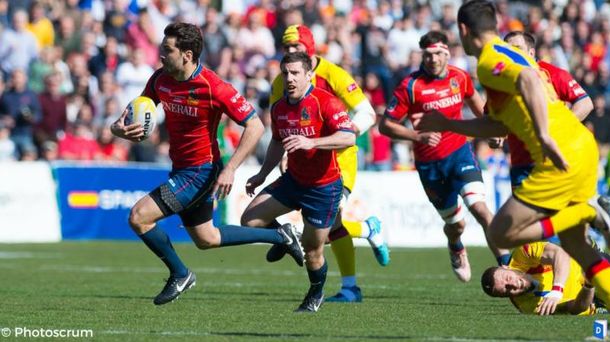
Image result for Charly Malie spain
The REC is unable to be full strength
for a 5 match European tournament
let alone a longer multi continent league

Also if availability for Fiji would be a challenge, then it would be even worse in the second division for a team like Tonga and others. At least Fiji would have the draw of playing against some of the best in the world. The chance of Tonga or Samoa getting all their players to sacrifice their value in Europe and forgo an off season to play on the Southern Hemisphere schedule committing to the long flights around the world that a league spanning 5 continents would entail is very slim.

Likewise some of the lower ranked teams involved are teams with players that are still amateur. Spain or Belgium cannot reliably remain full strength throughout a 5 match REC tournament in one continent let alone a longer season across multiple continents. Not just through pro club commitments, but in some cases work commitments especially for longer away trips.

RWC will become the devalued 15s equivalent to the 7s version

Image result for rwc
No matter what WR claim, they would
devalue the RWC as a secondary event
with this Nations Championship

There is no question from this that the Nations Championship in effect becomes like an annual World Cup and renders the 4 yearly version a far less popular secondary sideshow event. If you are crowning in World Champion every year in a Grand Final then entire appeal of the RWC is lost or at least significantly reduced.

It would end up carrying the same prestige and value as winning the 7s Rugby World Cup does when there is already the World 7s Series circuit played every year. If you have such a World Series style international circuit in place then that replaces the World Cup as the top event rather than add to it. Instead the World Cup becomes more of a novelty than a showpiece.

For the Tier 2 nations this is particularly bad news. Whilst currently they can at least every four years take part in the sport's major showpiece event. A huge experience and career high point for many players. Now the RWC would become the lesser event next to the Nations Championship and the opportunity to play on the sport's biggest stage would be reduced to 12 teams from 20.

The relegation pathway is a con


The main way World Rugby have been selling this as great for Tier 2 nations is the proposed relegation (which there is obviously good reason to believe there won't be anyway) that offers a pathway. Whilst this may be preferable to the initial report of no relegation this still remains a bad deal though.

First of all reportedly any relegation would be delayed until 2026. Then not only would it take years of waiting for a playoff to actually take place but the cards would be stacked against those coming up.

This means from 2022-2026 those at the top of the second division will have been stuck there hardly get any opportunity at all to play any higher ranked opponents for several years outside a devalued RWC.
Image result for georgia usa rugby
Teams like Georgia or USA have to wait
years until 2026 for a possible playoff
which would be held only every two years

and they are put at risk of entire careers
potentially passing by having scarcely played
higher opposition outside a devalued RWC

It would be a big ask for that Division 2 winner, having so scarcely played any stronger opponents in years, to then go and win a single one off match (probably away from home) up against an opponent who had far more experience playing years at a much higher level and also far better resourced and prepared through years worth of much superior funding (in trying to get this idea the green light WR have guaranteed Tier 1 all their 6 Nations and Rugby Championship top division sponsorship revenues up to 2033 even if relegated).

So under this proposal for whoever tops the second division by the time they got a playoff in 2026 it could be as long as 4 years since they last got a chance to play a higher ranked team outside a RWC. Then with the relegation playoff being held relatively infrequently only held once every two years if they lose that single one off match, or lose just once or twice and came second in the second division, this could very easily grow to 6 years, to 8 years, and to over a decade or more.

Indeed people talk about possible risk of relegation for Tier 1 nations (which in reality for most of them ranges from very small to virtually negligible one hence why SANZAAR are okay backing it with Japan and Fiji involved). But really the risk for those Tier 2 nations in the second division of this Nations Championship seeing their already limited once or twice a year opportunities to play Tier 1 further reduced or even totally wiped out is a far greater one.

In November we have seen Georgia, Tonga, USA, Samoa all play Tier 1. Only two can get a playoff in 2026 so it is guaranteed at least two of those teams would go at least as long as 8 years without playing a Tier 1 test outside RWC. Entire international careers could pass by in that time. It would crazy for those Unions to take that gamble all for a relegation system that is weighted against them.

The sport internationally already suffers from an existing "tier" system that serves to promote an incredibly static world order in its top 20. In the professional era the same 9 Tier 1 nations have held 98% of the RWC quarter final positions and rarely fallen outside top 10 in the rankings. Whilst also the 20 team RWC has never had more than one team change from the previous edition.

Given the rarity of these playoffs, along with the financial and competitive disparities between the divisions, the Nations Championship would further entrench this static world order to an even greater degree than it is now. In terms of potential upward mobility the Nations Championship would be the international rugby equivalent of the English Premiership ... but even worse.

The league format leads to dull, demoralising, repetitive international rugby


There have been demands for more higher ranked competition especially for the best Tier 2 sides. However this manages to do so in the worst possible way in only doing so for two sides.

Ideally teams schedules should be relatively balanced. So unless you are number one that includes fixtures against higher ranked teams to test themselves against stronger opposition, even contests with similarly ranked teams, and also lower ranked teams which can often afford more opportunity to possibly test new players and allows that opponent to test themselves against stronger opposition as well.

If it is too weighted either one way towards better or worse and is like that year after year then for fans the schedule can get dull, demoralising, and repetitive and that is exactly what this Nations Championship format does. It is one thing adding Japan to the Rugby Championship for example, but then to maybe play some lower or similar ranked sides the rest of the year, but this just puts them at risk of being in the Italy position of poorly balanced fixture lists.
Image result for angelo esposito rugby
Angelo Esposito has 1 win in 20 tests
which is the joint worst international win
ratio for any player over the last 100 years

Italy this RWC cycle so far have an overall win percentage of 15.78%. Clearly the worst of any top 30 nation. Several modern era Italians are high up on the list of most international losses and lowest career win percentages (Edoardo Padovani for example has one win in 20 caps). That is a result of their fixture list featuring against sides 10+ ranking places above them more often than they do against those ranked either a couple places above or below them. They have played the All Blacks and Wallabies much more than they have Georgia or Tonga.

There is a good case to be made that this has not been at all good for the morale of both players and supporters than if they did have a better balance. The same applies similarly in the opposite direction for Georgia in the REC winning five Grand Slams in six years at a lower level but only getting one off opportunities (and always away from home) against Tier 1.

The proposed third division can only have been created by a total imbecile


Whilst the top two divisions of this Nations Championship are bad enough for Tier 2 teams, spare a though for those such as Canada and Brazil, as the third division is something you can only conclude must be have been created by somebody with approximately zero knowledge of rugby at that level.
The proposed 54 team three division "Nations Championship" ("Belgiumwe" and "Namibiawe" were deleted)
The proposed second division includes five European teams (even though there are certainly better teams left in the third division than the fifth best European team) and five from the rest of the world.
Image result for brazil canada rugby 2019
Brazil and Canada are listed to go down
to a much lower level under WR Nations
Championship proposals which risk
ruining progress towards a 24 team RWC

As a result this would very likely mean at least one of Canada or Brazil get moved down from the Americas Rugby Championship to a much lower level third division which apparently will be a 4 team home and away regional conference.

This is unbelievably stupid. Canada in 6 matches vs Mexico, Trinidad & Tobago, & Cayman Islands could score 500+ points. Meanwhile we would see one of the most improved teams in the sport Brazil take a significant step back from competing with USA or Uruguay back down to just playing Chile, Colombia, and Paraguay. Namibia are also left in the African group they dominate.

World Rugby mention "potentially moving to 24 teams in 2027". This would be an overall positive idea we have written about before. However in pursuing the Nations Championship under this format WR seem to be intent on doing significant damage to the chances of the lower nations being credible.

Under this format it's possible that if Canada for example were to lose a playoff against the bottom team in Division 2 (maybe Uruguay or an other), then they could possibly head into such a RWC up against some of the best in the world with the bulk of their fixtures the past few years having been against the likes of the Cayman Islands. The same goes for Namibia, Brazil, and other possible RWC candidates in the third division which would be guaranteed to provide at least two teams to the tournament.

They also rip up the REC and RET in favour of creating mismatches as well. Rugby Europe said they had no consultation it certainly shows when you look at what they have done to that tournament.
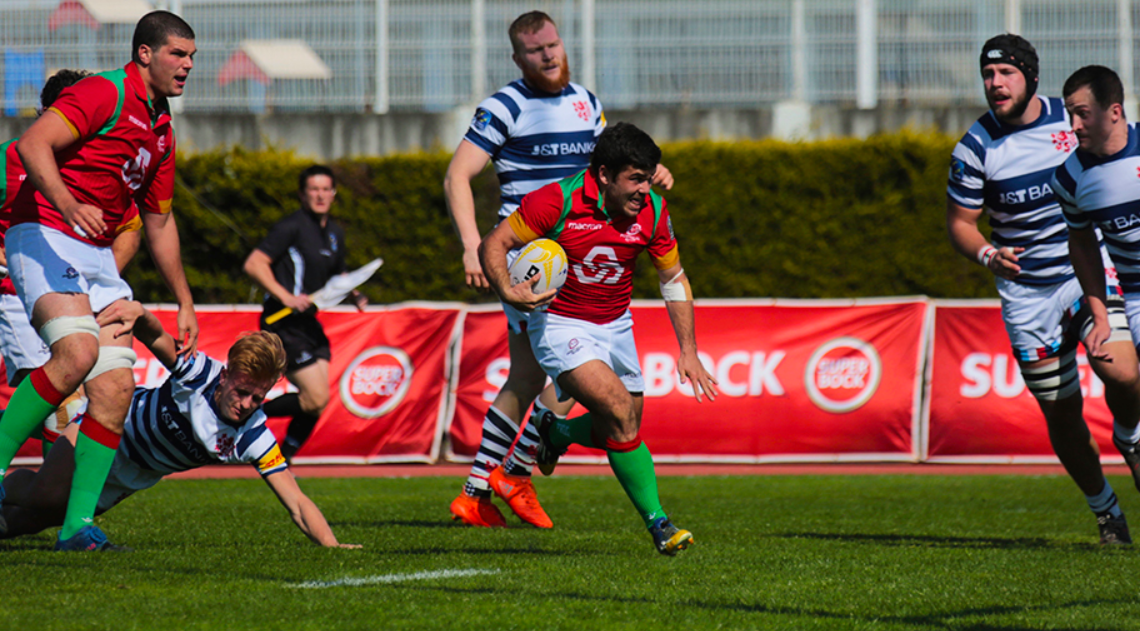
Image result for portugal  rugby
WR's mad plan for the third tier of
European rugby would see many more
mismatches such as this one last weekend

This year we have seen the most uncompetitive Rugby Europe Trophy to date with apart from the Netherlands a young Portugal side routing everybody. Evidently last weekend there was a big gulf between 13th and 18th in Europe, yet the geniuses at WR decide to change it to a European competition involving 16 teams (4 pools of 4 teams) below the top 11. This is utter madness.

Among those teams they list are places with very little interest in rugby and what are basically park teams. Yet they have them possibly playing sides Germany or Netherlands, who whilst below current RWC level, would still utterly slaughter very low level teams like Andorra, Malta, or Israel. Again this is a concept that would set another recently improved nation like the Netherlands backwards.

Seriously anyone hoping to see RWC eventually to 24 teams and more nations like possibly Brazil continuing to improve and get to the biggest stage should oppose this total abomination.
Image result for Bill Beaumont
Bill Beaumont claims the Nations
Championship was done "with great
care" and "global game at the forefront
of our thinking" which is evidently a
lie when you look at their third division

Bill Beaumont had the nerve to claim on the WR press release that the Nations Championship proposal "has been developed with great care, extensive evaluation and with the global game at the forefront of our thinking". If you needed any more evidence how much of contemptibly brazen lie that is then just take a look at what a complete mess they have made of that third division.

And no it does not matter that it may be just a draft as the main point remains regardless. An organisation which had put one iota of serious thought or care towards "the global game" would not have put Canada in a group with the Cayman Islands, relegated an improving nation like Brazil backwards, displayed bizarre and absurd scenarios such as Hong Kong getting relegated to the North American group, Latvia getting promoted to the second division, or made stupid typos like "Belgiumwe" and "Namibiawe" on their officially released video.

CONCLUSION: World Rugby are a joke and the Nations Championship must be stopped


So just as a reminder according to Bill Beaumont "everyone, not just the established teams, will benefit, accelerating the development and competitiveness of the global game".

Yet it seems the plan to "accelerate the development and competitiveness of the global game" is to put several Tier 2 nations at risk of possibly negligible matches against higher level opponents for years on end. Or to actively put improving countries like Brazil backwards into a division with Paraguay. How the hell is that "accelerating the development" of the global game? It's the total opposite.

We also have quotes from Christian Mueller, the vice-president of Infront Sports and Media, WR's chosen partner for this project. According to the BBC "it believes the proposed Nations Championship would allow rugby union to grow in new markets, such as Germany and the United States".

Yet the plan in regards to the national teams of those two nations appears in the case of Germany to put them in a laughing stock of a European third division with park teams, or the USA risk barely playing any higher ranked opposition for possibly years whilst stuck in a second division with only one other team in their time zone. How exactly does that "allow rugby to grow" there?

In another interview Mueller was saying "rugby has to look beyond its strongholds" whilst advocating a proposal which ... simply looks after its established Tier 1 strongholds.

Image result for brett gosper
Brett "33 million fans in China" Gosper
is one those spinning Nations Championship
as an idea that is great for "the global game"

It is hard to know whether it is flagrant dishonesty, pig ignorance, or if they are simply delusional but everything World Rugby or their buddies at Infront Sports have commented about this concept being about "the global game" is not just wrong but laughably so on the same level as their "33 million fans in China" claim. Gosper even came out and claimed even amidst the outrage of the initial report that "fans were resoundingly positive about concept". That man has an attitude towards reality worthy of Donald Trump.

For Tier 2 nations this "Nations Championship" idea is awful and manages to be even worse than the status quo and the relevant Unions must do everything they can to make sure it does not go ahead. Also the fact WR seem to be trying to cynically use Tier 2 nations and talk of "the global game" as some sort of a media spin doctor effort to try and create pressure on 6 Nations doubters to sign up makes it even worse and their insulting dishonesty and lies on that point needs to be called out.

If this gets through and as a result we see for example this generation of young talents such as Beka Gorgadze, or Hanco Germishuys told they will spend the bulk of their prime years stuck in a second division never playing Tier 1 outside a RWC at least to 2026 (by which time they will be 30). Or that we see that total farce of a third division format introduced. It would be hard to forgive the blazers who to protect SANZAAR torched the growth of the sport all whilst lying about it being for "the global game".

Thursday, 27 September 2018

Thoughts on the possibility of an expanded 24 team Rugby World Cup

Recently World Rugby CEO Brett Gosper mentioned that expanding the RWC to 24 teams is a discussion that is now on the table and could possibly happen by 2023 if progress from lower ranked sides against Tier 1 in 2019 is good enough. Here is a look at what that tournament could look like and why whilst any expansion would add some weaker teams it does have some arguments in its favour.
The RWC trophy on tour in Germany

The possible 24 team RWC format


The current RWC format of 4 pools of 5 teams has been criticised as inherently flawed on the basis that the uneven number of teams in each pool will always mean unequal rest periods.

That has been used as an argument for the 24 team RWC, which could come in either two forms, six pools of four under the 1982 FIFA World Cup format, or the 1986-1994 version which was also used for the recent UEFA Euro 2016.

However both those come with issues as well. The problem with the latter is with 16 teams advancing to the second round it turns the pool stage into somewhat of a non-event. The only intrigue in terms of qualifying would be which of the third pool seeds beat the fourth seeds by enough of a margin to get the requisite points difference to progress. Although other matches perhaps could still maybe carry some importance in the context of securing a better passage to the final.

The 1982 FIFA World Cup format creates a little more tension in the pool stages, and removes the unsatisfactory "lucky points difference winner" element of getting through to the next round, however also comes with problems in its second round phase of matches that act to decide the semi finalists.

A second round format of 12 teams split between 4 pools of 3 would revisit the unequal scheduling issue of an uneven numbers in pool, as well as creating the potential for some dead rubbers at a point when the tournament should be approaching its most important stage.

So really none of these formats in either 20 team or a 24 team RWC are perfectly ideal. The 16 team second round is probably the slightly better of the two 24 team options should expansion happen though.

4 team pool much better for all Tier 2 nations


It has been well documented that some Tier 2 nations despite having the least capable to manage from short 3 or 4 day turnarounds between matches with less depth than the biggest nations have got them the most often. There are numerous cases where this has had a notable effect in different ways.
Image result for Tonga France 2011
The two biggest upsets at the past two
RWCs has seen a Tier 2 side not reach
the quarter final after failing to win a
match off a short 3 day turnaround

Firstly it has arguably stopped teams reaching the quarter finals. In 2011 Tonga opted to play their strongest team for the tournament opener against New Zealand but then had to play Canada only four days later. They ended up losing that match, so their win later in the tournament against France didn't get them to the quarter finals. It's possible they may have lost that match anyway, but it would have surely helped had they not had to rotate their team for it, whilst the alternative of playing a second string and resting players for the opening match would have kicked the tournament off on a bad note.

Also at that tournament we saw Samoa lose their key match against Wales which they also played off a short turnaround. For that game they had lost two notable starters who took small knocks in their first game against Namibia and may have recovered in a week but not in three days. One of those was particularly crucial in first choice fly half Tusi Pisi, as his replacement Tasesa Lavea had an absolute shocker against Wales. Again it's possible Samoa may not have won anyway, but it would have been different, and they did lead that match past 60 minutes before fading over the last quarter.

Whilst in 2015 we saw Japan's quarter final hopes end against Scotland where they were only 12-10 behind at 45 minutes but faded badly conceding 33 unanswered points over the last 33 minutes. That was especially tough for them as they were not only playing two matches in four days, but two of the top 8 teams within four days, and after such an effort against South Africa it was always going to be tough to have the energy to repeat that again.

We have also seen those turnarounds effect matches in terms of resting players. In previous tournaments Japan had fielded reserves against the big team in their pool in Australia in 2007 and New Zealand in 2011 to rest players for more winnable matches (it's likely most other coaches would have done the same against South Africa in 2015 and we'd have never had that all time classic match).
Image result for Romania England 2011
Some of the most utterly forgettable
RWC matches in recent times such as
Romania vs England in 2011 have been
when Tier 2 teams have fielded second
string sides up against Tier 1 teams

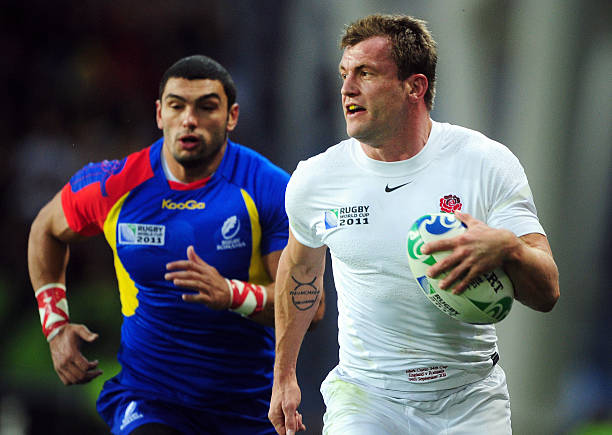
Numerous other teams have done this too. For example Romania fielded reserves against England in 2011, as did the USA against Australia in 2011 and South Africa in 2015 in order to target the next match in three days against a more winnable opponent. In all those cases a match between a Tier 2 nation's second string and a Tier 1 side have been some of the worst and most forgettable of the tournament. Only rarely do you get an exception like Georgia in 2015 who gave a credible effort against New Zealand in spite of resting several players.

Many of those who complain of more blowouts in a 24 team RWC don't understand that whilst there is the potential for that, you would also get the chance to schedule the matches better in a way that reduces some of those sorts of matches as listed above where teams do not put out their best (indeed none of those teams would be likely to still field a second string in any match with points difference playing a role in whether they got to the next round or not).

It also means Tier 2 teams that do achieve an upset a more likely to get to a quarter final from it. In the 24 team format that France vs Tonga result would possibly have come in the last 16 for example.

One less match for the 8 weakest teams also makes sense. It is easier for a team like Namibia for example to put their strongest effort all into three matches. In both the previous RWCs in 2011 and 2015 they have played their best team throughout on a tight schedule and run out of steam by their final match against Wales (especially the second half) or Argentina despite some better earlier efforts. Same also could be said of Uruguay in the second half vs England in 2015, or Georgia vs France in 2007.

Concerns of more blowouts somewhat overblown


As already explained the existing 5 team pool format already lends itself to some larger margins than possible with 4 team pool. Both with matches involving weakened teams like USA vs South Africa 2015 and Romania vs England 2011, or with the weakest team in the tournament Namibia playing their best team on one of the tightest schedules in 2011 and simply having nothing left by the final match.

Any expansion would though obviously be including weaker teams. However the likely four added entrants are not so far off the existing participants that we will necessarily see a return of 12 plus tries conceded in a match. Romania and Spain are the obvious ones who both are ranked in the top 20 teams right now but missing out next year due to eligibility issues.

The next best others are probably one of Brazil, Germany (at least the version not wrecked by political infighting) or Hong Kong who are a step down but with a full two months of preparation should be able to at least match USA's second string effort against South Africa. That admittedly is not particularly great, but the point is that if you account for possibility of reducing those Tier 2 second string matches then there wouldn't be all that many more blowouts in a 24 team competition compared to how many there already are currently in the existing 20 team one as some might expect.
Image result for Fiji rugby 2007
Fiji in 2007 are the only team in the
professional era outside Tier 1 sides to
have reached a RWC quarter final

Really it is the repetitiveness of the quarter final lineup that is more of the problem for the tournament than the bottom end now. In the professional era only Fiji in 2007, who were fortunate enough to run into a Gareth Jenkins coached Wales team, have broken the hold the same 9 Tier 1 sides have had on the last 8 RWC lineup over the professional era. Whilst the list of genuine potential finalists and winners has not exactly increased much over that period either.

Perhaps the strongest argument against a 24 team RWC is that expanding the list of quarter finalists needs to be the focus before expanding the list of qualifiers. Although as also already noted, Samoa and Tonga in 2011, and Japan in 2015 would have had their chances of breaking into that quarter final lineup increased rather than decreased in a evenly pooled 24 team format.

Short term pain for longer term gain


Also we are of course speaking about all this in the present moment. The strongest argument for a 24 team RWC lies in the boost to the sport it would bring to all the new participants over the longer term.
Image result for USA rugby world cup 2007
A classic RWC moment that would have
not happened had the RFU won their bid to
host in 2007 and cut the tournament to 16

For some of the most improved Tier 2 sides in World Rugby that progress is likely to have been significantly slower if they had not benefited from the RWC's last expansion to 20 teams.

If the tournament had always remained at 16 and the USA likely missed out on RWC qualification to Canada for the last 20 years would they have been in a position to finally launch a professional domestic league and take a historic Tier 1 scalp against Scotland this year? It's doubtful. It's also unlikely Georgia would have progressed as fast as they have done without the opportunity to make their initial RWC debut in 2003.

That expansion also cut off the opportunity for Rugby League to get ahead of Union in certain territories. No doubt if the USA had spent the past 20 years outside the RWC then the ground may been riper for League to have had a better chance of trying becoming the more dominant code there. Also potentially in parts of Europe too. That is extremely unlikely to happen now though and it is thanks to the expansion in 1999 to 20 teams. Also if one of Fiji, Samoa, and Tonga always had to miss out every RWC the sport may have faced difficulty than it has in keeping their interest on Union up against League as well.

Whilst it may have added more blowouts especially over the first two or three editions, that move to 20 was clearly a very wise move in the longer term for the global game. Also as a side note rugby history should look back unfavourably on the blazers at the RFU for campaigning for the RWC to be cut back down to 16 teams in 2007.
Image result for uruguay rugby 2015
Uruguay may have lost all their matches
at RWC 2015 by wide margins but from
that appearance have since progressed
significantly both on and off the field

A more recent example of a nation whose progress has been accelerated by a RWC appearance is Uruguay. They were arguably the weakest team at RWC 2015 and got put in the pool of death, but since then rugby in the country has improved both on and off the field and Los Teros will now arrive at RWC 2019 a far more professional outfit and with new a South American professional domestic league on the horizon in the 2020s.

It is not possible to look precisely into the future, but expansion to 24 would potentially bring similar benefits in terms of accelerating the sport's growth in the beneficiaries of that expansion as well even if they were not all impressive on their debut tournament. Those would notably be nations like Germany, Spain, or Brazil who have all beaten regular RWC nations over this 4 year cycle.

What above all brings most improvement to a nation is is more money and participation in the sport's showpiece event would add much more sponsorship, and interest to reach right back down right to the grassroots of the system. Also of course the participation of more countries and growth in audience in those territories would have the potential to bring more money and sponsorship to World Rugby too which is why the move has been mooted in the first place.
Image result for Brasil espana rugby
Brazil and Spain are two potential nations
who would benefit from a 24 team RWC

So should the expanded 24 team RWC happen?


Anyone who cares about the sport's global growth should agree an eventual expansion is desirable at some point, but the debate about when the time is right ultimately comes down to personal judgement. However for what it's worth from my personal point of view the pros of the 24 team RWC (a possibly fairer pool format that allows better performance from Tier 2 sides and a significant boost for the sport's growth in new territories) are hard to ignore and outweighs the cons (a dilution of quality with more teams who have no quarter final hopes and a less exciting pool stage where it is harder to get knocked out than get through) and I lean towards that happening as soon as 2023.

However whilst the sport has perhaps found more teams perhaps becoming more competitive amongst the lower ranked sides at the RWC over this cycle and the qualifying campaign (apart from in Africa) has in general been more competitive than 2013/14. The competitiveness of Tier 2 up against Tier 1 (excluding Italy) and the repetitiveness of quarter final lineups remains something that still needs to be improved upon. That is another topic, but the shut door to all the sport's major tournaments outside of the RWC is a problem and expansion is probably more badly needed there than at the RWC.

Monday, 6 August 2018

The Pacific Islands desired eligibility reforms will never happen

Charles Piutau has been seeking to
switch to Tonga in time for RWC 2019
Recently a handful of articles have appeared asking for reform to the eligibility laws to allow former internationals from Tier 1 nations to represent more than one nation.

This is something that Samoans and Tongans have wanted for years pretty much ever since the rules tightened in 2000 and it is not hard to work out why. They both have a number of outstanding players who would have been eligible for them either by birth or heritage had they not represented New Zealand or in some cases Australia, who are now mostly based in Europe with inactive international careers. Over 16 years ago it was the likes of Andrew Blowers, Alama Ieremia, Dylan Mika who really wanted change in time for them to play at RWC 2003. Now it is the likes of Victor Vito, Steven Luatua, Charles Piutau, Frank Halai, or Sitaleki Timani who are in the same position (although unlike previous players there is the possibility once every four years of them switching through Olympic 7s).

There is a reasonable argument to make in favour of this. Adding that calibre of player to the RWC would immediately boost the depth and on field quality of the tournament. However, there are also arguments to be made against it that the Pacific Islanders do not seem to have fully considered.

First of all many of the articles from Samoans on this issue have been misrepresenting reforming eligibility to the benefit of Tier 2 nations generically, or simply poorer nations generically.

Dan Leo tweeted "about time @worldrugby made a ruling on eligibility that truly favours Tier 2/3 Nations". Pacific Rugby Players Welfare tweeted in regards to the one nation rule "hinders poorer nations [...] and only serves interests of already established rugby nations". The headline on Stuff.co.nz read "push for rugby eligibility law change to aid poorer nations".

That is simply not true. It is a reform that primarily benefits nations like Samoa, or possibly also Spain, both of which are teams who select a considerable (usually at least over 60%) amount of players with heritage through parents or grandparents from a nearby Tier 1 nation.

For other nations though whose players are usually entirely raised and developed through their own system, it not just has no benefit but it actively puts them at a disadvantage to their competitors.

It is of no benefit to for example Georgia, if the introduction of a number of All Blacks to the Samoan team bumped them down their RWC pool. Or Uruguay, if the team they had invested a lot of planning and resources into developing were pushed out of a RWC at the expense of a Spanish team that had just drafted in a number of former French players with Spanish grandmothers.
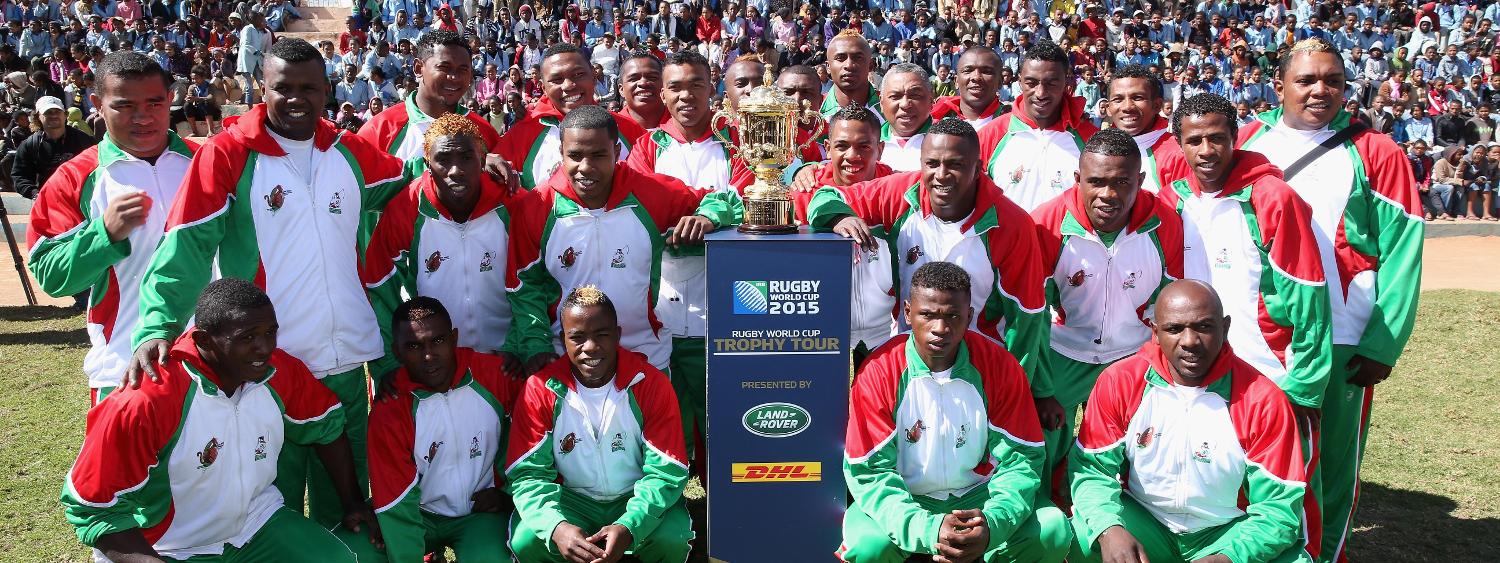
Image result for madagascar rugby
Looser eligibility laws would in fact be
a hindrance to one of the poorest rugby
nations in the world in Madagascar

Also moving somewhat down to the rankings. It is also of no benefit to say for example Madagascar, which according to the IMF is one of the 10 poorest countries in the world, or another relatively not well-off country like Uganda if they were either relegated or denied promotion to the Africa Gold Cup by a North African team who has been able to bring in a number of French internationals.

In sport there will always be winners and losers. There are small nations that would miss out due to those proposed eligibility changes just as there would be some that gain.

Pacific Rugby Players Welfare has said as part of their argument for this that "better results at RWC = increased sponsorship money". Yet by the same token that also means somebody (likely another Tier 2 nation) getting worse results at RWC and less sponsorship money. That is just the way sports works.

In the end there is some validity to both sides of the argument. Samoa would argue that its a waste to have such talent outside international rugby and they can make the RWC stronger.

Whilst on the otherhand a country like Uruguay would argue for the international game, which is the sport's key vehicle to grow and attract new fans, to try and Rugby League its way to a stronger RWC through ex-Tier 1 players at the expense of Unions who have actually gone and put significant time and resources into improving their own development programs is short-term thinking, which will only serve to discourage further growth and investment into the sport and its reach globally in the longer term.

There is no clear right or wrong answer in this debate though. The question of what the eligibility law ought to be can never be settled and people will always argue strongly one way or the other depending on their personal judgement over whether it should be tighter or looser.

However regardless of what people think should happen. There is simply no way the Samoans or Tongans have any chance of being granted the reforms they want. Even the SRU themselves have acknowledged that "as a matter of fact, it's probably almost impossible".
Image result for Steve Tew oceania
The proposal Samoa suggest is similar
to the one NZRU CEO Steve Tew put
forward to the IRB Council in 2010

We know this as a similar proposal backed by New Zealand "to allow players of Pacific or other ethnic backgrounds to switch from tier one to tier two nations after a 12-month wait" was already put to vote on the IRB Council back in 2010 and rejected. There has been nothing to suggest the landscape has changed since then.

The World Rugby council is comprised of 48 votes, which includes three each to each Tier 1 nations, two to Japan, one each to Canada, USA, Romania, & Georgia, plus two each to the six regional associations. If you are wondering why none of the Pacific Island nations has any votes it is presumably on the basis they failed the minimum criteria "to demonstrate good governance" which is required to be eligible for council membership.

Of those votes, there are five guaranteed in New Zealand and Oceania Rugby. Then maybe Africa perhaps and two or three others. But other than that, especially under the proposal the Samoans suggest they are struggling to find much support and there is plenty of opposition.

South Americans would certainly be staunchly against it. You would imagine both Georgia and Romania would be too. Whilst a team like Italy for example who have most to lose from such a change and would argue, with some justification, that it would be very unfair for them to have to play under a different set of disadvantageous rules to that of some of their closest competitors who are actually ranked above them like Japan or Fiji.
Image result for pat lam samoa
Pat Lam on his way to a try to help
Samoa beat Wales at RWC 1999

You can certainly mark them all down to be strongly opposed, just as you can every other nation that could vote for a rule that could plausibly risk bumping them out of the RWC quarter-final lineup or out of the RWC automatic qualifying places. In fact, Samoa beating Wales and Ireland in the 1990s with the likes of Stephen Bachop, Inga Tuigamala, Pat Lam, Frank Bunce, Dylan Mika apparently played a role in the change to it being one nation back in 2000.

As NZRU CEO Steve Tew said at the time of the vote in 2010: "the reality is there is a group of northern unions that is very nervous about strengthening the island nations".

Whilst Oceania Rugby president Harry Schuster who said "we are devastated" at the rejection of the proposal also mentioned who was opposed: "the Celtic unions mounted the strongest opposition, they were just looking for excuses to stop our proposal because the fact of the matter is, they are so scared of how powerful we'll become if it goes through".

The only way any of those Tier 1 nations could maybe be possibly be convinced if the proposal were to allow loose eligibility rules to apply to their advantage too. If Wales for instance, were allowed to pick Shannon Frizell if his All Blacks career does not end up being a lengthy one.

However there is a reason why Pacific Islanders suggest switching from Tier 1 to Tier 2 nations only. The reason being totally loose eligibility laws on switching nations really would be a disaster and only serve the interests of Tier 1 nations. We already have seen uncapped Fijians play for England or France after qualifying on residency, if the rules on switching nations were relaxed that could extend to full internationals too. Nemani Nadolo could get taken back by Australia, Scotland could have lined up an international like Leone Nakarawa as a project player, or Josua Tuisova switch to France.

Safe to say that is not something the Pacific nations, nor any other Tier 2 nation would be backing and would cause disgust from many rugby fans. Hence why the only rule that keeps getting suggested is to allow solely unused Tier 1 players to switch to Tier 2 (with varying criteria of different stand down periods or caps), and that simply has zero chance of gaining a majority of the World Rugby council vote.

Monday, 14 March 2016

'Old school' Bill Beaumont bad news for Tier 2 nations

RFU Chairman Bill Beaumont is set to finally take the Chairmanship of World Rugby from Bernard Lapasset after narrowly missing out 4 years ago. This is not really such good news for Tier 2 nations.

Thursday, 10 March 2016

The new voting structure on the World Rugby Council

An explanation of the reforms to the World Rugby voting structure, which sees three new Tier 2 Unions receive votes, although only a small rise in terms of influence of their vote.