Showing posts with label 6 Nations. Show all posts

Friday, 26 August 2022

Can "Tier 1" ever be persuaded to expand the Six Nations?

Can the Six Nations be persuaded to
open their doors to expansion?
Over the past several years after a poor result for Italy in the Six Nations there has been discussion around promotion and relegation. Whilst this does shed some light on the obvious unfairness of the system for those shut out by the status quo. It is not either a sensible or realistic idea and it is time it gets forgotten.

The risk (albeit for most Unions it would be tiny) would pose to any Six Nations side would be huge. A large percentage of each Unions budgets is based on the income generated by the tournament. Relegation would be potentially ruinous. It is a total non-starter and if you suggest it they just will slam they door in your face.

Whilst it is true this also makes the Six Nations blazers utterly hypocritical, as they know how much worse off they would be in the REC, yet talk down to those in Europe with ambitions to join for not being at their level. It nevertheless is not a good idea from the perspective of the overall growth and competitiveness of the sport. The potential gains of the side being promoted would be cancelled out by the consequences for the one being relegated.

Instead those who want to the sport grow must focus on making the argument for expansion. The problem here is of course there is unfortunately there is not much sign the Six Nations blazers want to spend a second contemplating this idea either.

However if the chance they accept relegation rounds down to something like 0%. The chance of expansion, although also small, is surely a tiny bit better. Also even if something is unlikely, doesn't mean there is never any value of making the argument for it, and the discussion always needs to start somewhere. Meekly accepting the status quo will doom "Tier 2" forever.

The Pacific Islands have vocally campaigned in the media for various things that were not supposed to happen (All Blacks in Samoa, looser eligibility laws) and managed to win. They should be a model for European "Tier 2" to fight for their interests.

The actual problem is the Six Nations run the European game like the continent's governing body but without the responsibility to help anyone but themselves. So pointing out that it would obviously help the sport grow enormously isn't enough. You need to make the case it will benefit "Tier 1" too and try address their biggest problems. So this a first draft attempt to think of ways of giving it some appeal to them and open the door maybe just a little.

The format

If the initial expansion is to 8 teams. The format would be two pools of 4 teams. It would be necessary to ditch the round robin league format with expansion as there is no room in the calendar to expand in that way.

The two pools could look something like this:

Pool 1: France, England, Italy, Georgia
Pool 2: Ireland, Scotland, Wales, Spain

This would be followed by a round of semi finals, bronze final, and grand final. To keep all teams maintaining revenue from five matches it would also require ranking matches from 5-8.

To avoid scaring the Six Nations. The proposal would be for this expanded format to take place only once every four years in between RWCs (like football's European Championship).

The first monster hurdle to overcome

Will attachment to the traditional
Six Nations clashes forever block
any hope of rugby's growth?
Immediately this plan will be met with a monster hurdle. A year without a "traditional" annual fixture like the England vs Scotland Calcutta Cup clash will seem utterly unthinkable to many in the Six Nations.

It is hard, but unfortunately this is something that the sport has overcome. If you follow through the line of thinking that an England vs Scotland or England vs Wales match has to happen every year as part of the tournament and that is non-negotiable. Then it will be simply impossible for the tournament and the sport to ever grow. Only a round-robin can guarantee these fixtures and that format cannot move beyond six teams. If the sport can't get beyond this point then we may as well give up any hope of rugby ever becoming significantly stronger on the continent.

Already suspect many in Six Nations tempted to slam the door shut again. But would note a couple of things. The added England vs Georgia match to the tournament would be of far more commercial value as part of a big event than in a friendly (remember Ireland vs Romania set the RWC record attendance in 2015). Whereas the "traditional" fixtures like England vs Scotland could always be replaced and sell equally well as standalone friendlies. So they could still have all their "traditional" rivalries and make just as much money from them, but also gain more than they would otherwise from the "Tier 2" fixture.

Also remember. In football there was an annual England vs Scotland fixture for 117 years up to 1989. The sport did not crumble going a year without it. There are other interesting matches and rivalries to make if more teams were allowed to grow.

The losing 5th/6th nation

Whilst it might not be so bad for the top four sides who reach the semi finals, for the 5th or 6th placed of the Six Nations, it would see a reduction in their level of fixtures with them playing two "Tier 2" sides. Admittedly this may be a hard sell (even though to repeat they can still organise the historic matches which would still sell well as friendlies).

But at least it is not nearly as hard a sell as the idea of promotion and relegation where a Six Nations side would in theory be exposed to risk of dropping out of the tournament completely.

Also we need not forget to think not just of the present but the future. A side like Spain coming up could bring big crowds and grow significantly with the benefits of inclusion. The atmosphere and vibe around the games as part of a big event should make the "Tier 2" games a lot more exciting for "Tier 1" an standard friendly.

Many "Tier 1" fans do not respect the REC (as seen by various predictions prior to Italy vs Portugal or Georgia this summer) but these sides have worked hard to improve and with increased resources available could be more competitive quicker than some think. It is not as if we are asking to consider sides who would frequently ship 60 points.

Rugby World Cup seeding bonus

Another concern is the tournament could fail to carry the big event if it seen as pointless. If held once every four years, with ordinary Six Nations still being held in other years, it would risk carrying little prestige when it is clearly harder to win the round robin format.

RWC seeding could add increased
importance to the tournament
One possible good remedy for this is attaching RWC seeding. Instead of the silly current method of basing the seeding on a snapshot of the rankings 3 years out. If this European tournament saw sides competing for seeding then all sides would be at 100% for it and the matches would increase with importance and intensity as a result. This would help it keep the vibe of a big event, and justify it as worth having once every four years as something slightly distinct and special than an ordinary Six Nations.

Obviously this would require both Six Nations and World Rugby to agree to this. But there has long been a missed opportunity to add more intrigue and tension to some mid-RWC matches if WR put RWC seeding directly at stake.

More revenue from "Tier 2" matches in tournaments than friendlies

As mentioned in detail in a previous article. If "Tier 1" played their "Tier 2" matches in a tournament context would have much higher commercial value than in friendlies.

Ireland vs Romania set the RWC attendance record at Wembley at far from cheap ticket prices. If the tournament managed was promoted and marketed in a way that created the same big event feel around as in RWCs. There would be little to fear in terms of revenue loss from those matches.

More matches to sell to TV broadcasters

Another point mentioned in the previous article. The tournament would also see an increase from 15 to 20 matches (whilst not adding more weekends). This would create more content to sell to TV broadcasters and more possible exposure for sponsors in more markets.

The potential pay offs from long term growth

In spite of the Six Nations undoubted success. It still has recently struggled to attract a title sponsor at the asking price. Opening the door to new markets could increase its visibility.

Finally it is important to repeat of thinking of the long term not just the present. Including sides like Georgia and Spain would allow them substantially more extra room to professionalise and improve. Both could also surely fill football stadiums if given a chance in an expanded Six Nations and bring excellent atmosphere and added colour to the tournament.

In addition opening the door to expansion (presuming qualifiers for the two new places) in the much longer term could also attract more sponsorship and investment in other less rugby oriented places like Germany if they saw the door was held open.

Talking about long term payoff may seem unpersuasive as it is vague and nobody can see in the future to guarantee it. But we have seen over the last 20 years the biggest success the sport has had in growth come from the RWC. The examples seen there show the best evidence that more inclusion is the most important factor in growing the sport.

South Africa

South Africa at the U20 Summer Series opened up
a place for Georgia to compete at the tournament
This is not something ideal as it removes a place for an REC team and also means the tournament is no longer European. But if the Six Nations were to add South Africa though like they are adding them to everything else their presence would remove any issue around reduced standard in the immediate term if that is the biggest problem. This move would at least open one place to an REC side (as seen at the recent U20 Summer Series) and one place is better than none.

First steps

Whilst accept it is a long shot to ever persuade the Six Nations to open up. Hopefully more articles like this can be the first baby steps to at least getting expansion some sort of hearing and start to create momentum for some change. It would be good to hear journalists start pressing the Six Nations blazers about the positive case of a rising tide lifting all the boats up with expansion and not the more negative case to bring Italy down with promotion and relegation.

Even if the idea of expansion sounds unappealing or not quite ready right now. Hopefully some will start thinking about it as a concrete goal to be achieved in the not too far future.

Even if the big goal remains a way off. Hopefully the idea of expansion being more widely discussed can at least perhaps lead to some smaller concessions from the Six Nations which would help the sport grow. For example one being the inclusion of Georgia and Portugal/Spain to the U20 Six Nations.

If you have any other good ideas of how the Six Nations can possibly be persuaded to consider expansion in the rest of Europe. Leave them in the comments below.

Thursday, 25 August 2022

The Six Nations waste potential to power rugby's growth

[This is a follow up post to a previous one about how the RWC has been the main driver of global growth over the past 20 years]

One may look at Italy and their results over the past 9 years and ask "How has being in the Six Nations helped them? They constantly lose". It is not often you see this point made, but in actual fact Italy has benefited MASSIVELY by being added to the Six Nations.

To understand this properly you need to think of the counterfactual where Italy were ignored by the Six Nations and remained a "Tier 2" side in the REC. In this hypothetical world all the following things would have most likely been different:

  • They would not have the annual budget of all the top five REC sides Georgia, Romania, Spain, Portugal, & Netherlands combined.
  • As a result not had the money for professional teams in the URC.
  • More often played at far smaller stadiums with far smaller crowds.
  • Not had the money to invest so much in improving what was a weak youth system.
  • Nor the regular international competition for that youth to test themselves.
  • Nor would they have the full 3 votes on the World Rugby Council.
  • Selection would have less consistency and involve more negotiation with clubs.
  • Nor would have they been able to select anywhere near the level of foreign imports and heritage players they have managed to get available over the years (over the 2003-2013 period this was a high percentage of their most significant players).
  • And may have very likely got caught fielding ineligible players and like Spain got booted out of a RWC by Russian sleuths if they played in REC too.

It is true Italy's wooden spoon collection has hardly made them the ideal example of how entry to the Six Nations can grow the sport. But that is only if you ignore what the Six Nations prevented them most becoming: a mid-table REC side probably 5 or 6 places lower in the rankings than they are today and without the ability to invest so much in improving youth.

The more you think about this. The more totally obvious it becomes. Of course Italian rugby is much better and richer than it would be otherwise outside the Six Nations. It is for this reason any suggestion they voluntarily put their place at risk in a relegation playoff is a non-starter.

Despite many losses Italy's participation in the Six
Nations has still boosted their level immensely.
Sadly for the sport though few appear to have properly understood this and been able to follow the logical implications of how spreading some of those same benefits of the Six Nations to others would grow the game on the rest of the continent. Instead after every bad result over the last 8 years we have more often heard useless talk of kicking Italy out of the Six Nations (a truly terrible idea that would risk setting them back years).

People now just assume if Georgia or Portugal were added to the Six Nations they would just be another Italy. However much like when the RFU wanted to exclude both those nations from the 2007 World Cup. This is a hopelessly short termist growth killing viewpoint.

Instead what they should be thinking is: "Georgia and Portugal are pushing Italy hard to close and exciting competitive games despite having only a fraction of their budget. Imagine how much more they could grow if the Six Nations opened its doors and they were able to get considerably more funding and experience".

Also: "Spain got a crowd of 40,000 for an exhibition game. There is huge growth potential there. Imagine how much stronger they could be with the budget to maintain a more consistent selection and retain homegrown players like Lucas Paulos and Samu Ezeala. Plus add heritage players the level of Joris Segonds or Rémy Baget like Italy has always been able to do with the likes of Parisse and Castrogiovanni, or in more recently Polledri and Capuozzo".

Lamentably though it is doubtful any thoughts along those lines crossed the mind of a single one of the Six Nations blazers this summer. And that is why the sport struggles to grow.

Georgia and other REC nations compete with a
fraction of the budget of Italy and other "Tier 1". 

Instead of encouraging and inviting growth. The vague alternative idea seems to be that "Tier 1" plays "Tier 2" occasionally in friendlies. And for a team like Georgia to ever join the Six Nations they must follow the same model as Italy and work their way into the tournament through a few wins in those friendlies until they can no longer be ignored (it is sort of the libertarian "pull yourself up by your bootstraps" line of thinking).

This idea basically means Georgia (or any other REC side) is asked to beat Six Nations sides despite having a fraction of the budget, a fraction of the professional player pool, a fraction of the top level experience, and those occasional matches when they happen most often being played away from home.

Unfortunately some clueless people think this is the best and most efficient way to grow the sport. Instead of expanding the Six Nations and enabling them to build a better budget, player pool, and experience to be able to compete. They are asked to perform a miracle only possible with a one off "golden generation" (which would then be wasted as they'd have spent entire careers playing those friendlies and be retired by the time they ever got into the tournament).

When discussing Georgia and the Six Nations. You will commonly hear something along the lines of "yeah, they should get chance of some more "Tier 1" games, but not the Six Nations". Whilst on the surface this may sound supportive, in reality it maintains the vastly uneven playing field and is basically just fobbing them off. Anyone who repeats that line with no plan of Six Nations expansion attached is not genuinely serious about growing the sport.

Expecting teams to repeat Italy's early professional
era wins over Five Nations sides is unrealistic and
ignorant of how international rugby has changed.
(Note: The comparison to Italy c.1997-98 is utterly flawed for another reason. In those barely just turned pro years of the sport. Scotland (at home) could lose 68-10, France (at home) could lose 52-10, and Wales could lose 96-13 versus South Africa. Ireland (at home) could lose 63-15, England could lose 64-22, and Argentina could lose 93-8 versus New Zealand. Never in the history of the sport was the gap between 5N and SANZAR bigger. Nowadays the international landscape is totally different. It is simply not a fair comparison for example to compare Georgia playing Ireland in 2022 to Italy playing Ireland in 1997).

Expansion can be in the interests of "Tier 1" too

Obviously expansion to the Six Nations should be in the interests of every REC nation and anyone who genuinely cares about growing the sport (a lot of fans may say they do but when it comes to applying the necessary changes needed very clearly don't).

But there is another reason why expansion and involvement of "Tier 2" in big events ought to be in the interests of "Tier 1" instead of just playing "Tier 2" in friendlies.

Anyone who has followed rugby long enough should know vaguely supportive promises of "more games for Tier 2 between World Cups" are far from reliable. In 2017 World Rugby pledged to increase "Tier 1 vs Tier 2" matches by 39% over 2020-32. However pretty much the status quo remains (four SANZAAR sides play four of the Six Nations sides on a July/November weekend with the two left over Six Nations playing a "Tier 2" nation).

Reason for little change is obvious. Those friendlies are on some level fundraisers. The biggest draws are the biggest brands (ie All Blacks). When it comes down to it, no "Tier 1" side is volunteering to play two rather one "Tier 2" side in November. For matches involving less established teams to attain high commercial value it requires attachment to a big brand event.

A perfect example of this is the last three matches between Fiji and Uruguay. Despite being one of the lower profile games shifted to midweek, in 2015 and 2019 the fixture sold out stadiums in both Milton Keynes and Kamaishi which were broadcast to global audiences on TV. By contrast in 2018 they played a November friendly at Hartpury College and the crowd was in three figures and only streamed on YouTube. Many of those fans did not come for Fiji vs Uruguay specifically. They came to see the RWC.

Ireland vs Romania sold out Wembley to set
the record crowd of 89,267 for a RWC match.
Similarly in 2015 when we saw Ireland vs Romania sell out Wembley to set the RWC attendance record of 89,267. It was not Romania that were a huge draw per se. Again it was the RWC as an event that sold.

The Six Nations as an event has a similar effect in selling the matches involving a somewhat lower profile team in Italy. We can see this by comparing the fixtures involving Italy in the Six Nations and the exact same fixtures when played as friendlies in RWC warm ups.

2003 RWC warm ups:
25,000 vs Scotland in Edinburgh (20,000 fewer than previous fixture in the Six Nations)
14,000 vs Ireland in Limerick (35,000 fewer than previous fixture in the Six Nations)

2007 RWC warm ups:
14,000 vs Ireland in Belfast (35,000 fewer than previous fixture in the Six Nations)

2011 RWC warm ups:
20,000 vs Scotland in Edinburgh (22,000 fewer than previous fixture in the Six Nations)

2015 RWC warm ups:
10,000 vs Scotland in Torino (56,000 fewer than previous fixture in the Six Nations)
43,000 vs Scotland in Edinburgh (19,000 fewer than previous fixture in the Six Nations)
52,000 vs Wales in Cardiff (14,000 fewer than previous fixture in the Six Nations)

2019 RWC warm ups:
30,000 vs Ireland in Dublin (21,000 fewer than previous fixture in the Six Nations)  
25,000 vs France in Paris (25,000 fewer than previous fixture in the Six Nations)
50,000 vs England in Newcastle (32,000 fewer than previous fixture in the Six Nations)

Some of those crowds are good (50,000 in Newcastle or Cardiff). But still on average across those 10 friendlies Italy games sold 28,000 fewer tickets per match at presumably lower prices and lower TV rights than they did in the corresponding Six Nations fixture. The largest effect is seen in Italy itself, who attract far better numbers for the Six Nations than friendlies.

To be fair "Tier 1" Six Nations sides (besides Italy) get quite healthy crowds these days hosting their annual "Tier 2" fixture in November, but those matches are still obviously of much higher commercial value as part of big events than friendlies.

If the Six Nations would be willing to think long term there is also the larger potential future pay off in creating more competitive teams with bigger fanbases, and having a tournament with more matches to sell, which allows for more possible exposure for sponsors and larger TV deals. The modern day RWC has grown more lucrative as an event for these reasons and Six Nations could too. "Tier 2" growth should not have to come at expense of "Tier 1".

Conclusion: Six Nations has huge potential power to grow the sport in Europe that it is wasting. As seen at the RWC, most growth comes from expanding major tournaments, not from friendlies.

"Tier 1" blazers take the view that the big mid-RWC events must ultra exclusive to themselves, and they will "grow the game" with the odd friendly. This gets it totally back to front. It is the big events that make the biggest impact in growing the sport and should aim to be inclusive. Then you can leave sides to organise friendlies and three match test series mostly as they please.

For rugby to grow, and one day fully shed its "Tier" tags, it is crucial that its administrators open their minds to the idea of expansion of the major mid-RWC event. There are huge potential gains to be made throughout the continent from an expanded European Championship event (maybe once every four years similar to football). Especially for all those labelled "Tier 2" of course, but long term also "Tier 1" as well.

It is incredibly frustrating the Six Nations with their total lack of vision and desire for growth fail to see this. European expansion should be seen as a great opportunity for the sport, where unlike the USA there is a more open niche available for full contact team sport, but it gets ignored and wasted as "Tier 2" sides remain asked to compete at enormous financial and competitive disadvantages in perpetuity. Rugby has to look at where successful examples of growth have come at RWCs and apply those lessons to their other major events.

Video: Everything Georgia captain Merab Sharikadze says here is spot on. "Rugby must be more open".

Thursday, 24 October 2019

Why World Rugby's "jewels in the calendar" hold back the global game

When World Rugby gave us their new "Nations Championship" idea their press release made sure to reassure that the 6 Nations, Rugby Championship and British & Irish Lions formats would be all totally retained and protected at all costs as the "jewels in the calendar".

However whilst it is worth acknowledging this may not be a very common view in the rugby world, from the perspective of the global game, those traditional "jewels in the calendar" in their current format are actually a big part of the problem in holding back expansion and growth of the sport.

International rugby outside Tier 1 now all based around RWCs


When Fiji coach John McKee told Reuters recently that he is concerned "rugby becomes more like football where there's not really that much interest in internationals outside the World Cup" you had to laugh at the ignorance and total lack of self-awareness of his own sport.
Image result for John McKee
Fiji coach John McKee says he "try some
new young guys" next year and not prioritise
winning as "the real goal" is now 2023.

International rugby for those not involved in those "jewels in the calendar" has become all about the RWC to a far greater degree than in football, where there are major tournaments in between World Cups that are more inclusive in involving more nations. Indeed in another interview earlier that same week McKee himself had already been talking about planning for 2023 and how pretty much everything before that was all part of the preparation.

He said not having to play qualifiers means rather than play some experienced players not certain to make another RWC he can now "try some new, young guys" and not be overly concerned about winning as "the real goal is to build the best possible team for 2023".

This thought process is not unique to McKee amongst coaches of Tier 2 nations. Almost immediately after the end of their RWCs you will already hear talk begin immediately of preparing for the next one in 4 years time, with discussion about moving on any players around the age of 30 or over (even if in some cases the players could certainly maintain a good level for another couple years at least).

Rugby fans frequently overrate the strength of international rugby outside the RWC based just on the success of the 6 Nations, Lions tours, or November tests between major nations. Below that top tier the international rugby system is broken, precisely as it creates little interest outside RWCs, is not inclusive for many nations, and does not work financially and relies upon subsidies from RWC money. This situation almost perpetually puts Tier 1 in a dominant position with Tier 2 left with a begging bowl.

In fact football, the sport that McKee ignorantly derides, actually has a far better more inclusive international game involving more nations. If rugby were to move to something closer to their model of having more inclusive tournament style major events in between the RWC it would do a lot of good for the spread of the global game outside just the traditional Tier 1 powers.

Round-robin format is a buffer for expansion


Whilst rugby does have two major competitions in between RWCs the exclusiveness and round-robin league style format of both of them acts as a complete buffer for potential growth and expansion.

Firstly the format limits the amount of teams you can practically ever involve. Already the 6 Nations and Rugby Championship from start to finish takes almost as long to complete as the 20 team RWC. Without a format change there is barely room in the calendar for one extra team let alone multiple more.

Secondly this format creates a higher barrier to entry for expansion to new emerging teams. Some weaker teams in a tournament like the RWC are more manageable. They are out after 4 games (3 in a 24 team RWC) and then have to go back and win some games again to get back there.

There is less appeal though of a minnow making up the numbers in round-robin format where they keep playing many games long after having been eliminated. Seeing Russia play Ireland once every few years is fine, seeing a long line of such games repeated annually though would get somewhat tedious. Some may say that has arguably become the case to some degree after an entire 4 year cycle of Italy losses in the 6 Nations, and Italy are a lot better than a team like Russia.
Image result for sergio parisse defeat
Round-robin nature of rugby's major
mid-RWC tournaments has had some
difficulty in the success of expansions
with demoralising lopsided win/loss
records and relatively slow progress.

It's hard to see for example if rugby wanted to expand with the USA in a major round-robin tournament for instance, that putting them in an Italy position of sub 20% career win percentages is the ideal way of doing it and attracting new fans. This is different to a poor RWC on a 4 yearly basis. If repeated year after year any novelty of the fixtures wears off and some level of demoralisation and tediousness begins to slowly creep in. All Blacks notably sold out Soldier Field vs USA in 2014, but this would be less likely to happen year after year.

Similarly right now there is serious talk of Japan entering a major tournament. Now this shouldn't be understood at all the wrong way. Obviously it is great for them (as it would be for anybody) to enter a major tournament and become Tier 1 with access to better funding, fixture lists, and off field voting power that comes with it when the alternative is being stuck in Tier 2 just playing lower profile friendlies outside the RWC. However nevertheless putting them into the Italy position of likely losing streaks can hardly be seen as the ideal way of capitalising on momentum from the RWC either.

More inclusion in major events vitally significant booster for the sport's global profile and funding across a wider spread of nations


Perhaps many are not bothered about the higher barrier the round-robin format creates. But it must be understood appearances at a tournament of the nature of RWC which can manage more lower sides has proven to be the best vehicle to elevate them. The growth of the RWC brand itself has been the big success story of the global game. It has pushed forward rugby considerably in nations such as Argentina, Georgia, and Uruguay, delivered huge TV audiences in nations like Japan, and become a cash cow that services the development of the sport from top to bottom.

Involvement in a similar style of major tournament mid-RWC would possibly further boost them and more nations in terms of publicity and money coming into their programs.
Image result for fiji uruguay rugby milton keynes
Fiji vs Uruguay at RWC 2015 broke the stadium record at
Milton Keynes selling over 30,000 tickets at not cheap prices.
Outside of the context of the RWC though the match would
have barely got 1,000 at fish & chip prices. International
friendlies only work commercially for the biggest brands in the
sport. For others it is RWC that drives the funding for them.

It can't be stated enough that the commercial value a major tournament brand brings is massively significant for smaller teams who do not carry the historic team brand like the All Blacks, Wallabies, Springboks, England, Wales etc who can sell international friendlies. It is far harder to sell a friendly vs Uruguay for example, even for other Tier 2 nations who would be closely matched with them. For these smaller teams it is the context of the major tournament that brings crowds and large global TV audiences.

For example Fiji vs Uruguay played in a major tournament sold out reasonably sized stadiums in Milton Keynes or Kamaishi in games that were televised across the world on TV. Whilst when they played in a friendly at Hartpury College there was a crowd of closer to around 800 with tickets probably about the same price as fish & chips in a game that was only seen streamed by World Rugby on YouTube.

The international friendly system that mid-RWC cycle rugby is built on only works commercially for the big dogs (and only for the lower teams when one of those big brands visit them). Much of the rest involving Tier 2 has to be mainly subsidised by World Rugby (using that money that comes from those sold out games and TV rights from RWCs) as it is not sustainable on its own.

Again this demonstrates the lack of self-awareness of McKee as was pointed out earlier. When he said "there's not really that much interest in internationals outside the World Cup", he ought to look at his own sport outside matches involving the top few leading teams including some of those of his own.
Image
The tiny crowd for Fiji vs Georgia in June 2016. The same
fixture at the RWC was recently played in front of a sold
out 21,000 crowd and broadcast across the world on TV.

Fiji vs Georgia in the RWC recently was played in front of a packed 21,000 stadium in Osaka paying Japanese prices and shown across the world on TV. But when the Lelos visited Fiji in 2016 there were barely 1,000 paying Fijian prices and it was played before mostly empty seats and you could only watch it was on an internet stream.

Whilst it may not be the exact same degree as a RWC, a mid-RWC tournament which involved more sides would be able to increase interest and funding across more nations. A fixture like Scotland vs Spain for instance would sell and get a lot wider coverage in the context of a major European tournament than it ever would in a November friendly. And also as shown by the likes of Fiji vs Uruguay or Georgia so too would the Tier 2 vs Tier 2 games in such a tournament as well.

That increase in interest and funding is without doubt the most critical factor in the long term ability of the sport to grow and eventually become more competitive globally.

Round-robin formats very difficult for very small nations such as Pacific Islands

Image result for fiji australia rugby
Fiji in the Rugby Championship annually
would be practically impossible to do
successfully on the current calendar.

Thirdly the round-robin formats also deny the chance for really small nations, most notably the Pacific Islands, to seriously ever compete in a major tournament outside RWC.

There has also been some talk of Fiji joining the Rugby Championship which was mentioned as part of the proposed "Nations Championship" plan. However fact is this simply is unlikely to work.

A point that has been strangely ignored by many is that if Fiji were to compete in the Rugby Championship in its current calendar they would be removing a lot of their market value at European clubs (which no Fijian domestic side even if they had one that is fully pro will ever be able to compete with for wages).

It is totally unrealistic to ask these players (many from poor backgrounds) to make significant sacrifices to their earnings for international rugby. Any rugby career is relatively short in the grand scheme of things and can come to an end very quickly, but a typical international rugby career is even shorter and can come to an end even quicker. You are highly unlikely going to see too many Pacific Island players gambling on the value of their club contracts and livelihoods in the sport like that.

Also there is the fact that nations like Tonga or Samoa have very small facilities by the standards of the major nations. It is unlikely financially viable for them to be able to play as a host in round-robin formats year upon year without large subsidies. Samoa notably lost money when they hosted the All Blacks.

Involving them in more of a RWC style tournament is far more practical than a round-robin. Both in terms of the calendar for player release and preparation time, and also not having concerns over the expense and logistics that would come with Tonga hosting in a round-robin home/away tournament.

Tournaments held in one nation (or a few nearby nations) would not only bring in more money into the sport for these nations. It would also save WR a lot of money from the amount of enormous travel and logistical costs that comes with loss making subsidy reliant tournaments such as the PNC.

In addition to this mid-RWC tournaments would allow more nations who are perhaps more experimental, or traditional but too small for the size the RWC has become, to be able to host major events.

The reality of the unchanging rugby landscape


It is for all these multiple reasons why I personally believe that some form of major mid-RWC tournament style events the are the most practical way of expanding the sport to more new nations both big and small than the existing annual round-robin league formats they exist in today.

Compared to a round-robin it would be far more likely to allow for nations like Fiji to be involved at full strength as they do at a RWC. It would be more likely encouraging for a nation like Japan to enter a tournament style competition with a diligently prepared team than a lesser prepared one which is ground down by huge amounts of travel and losses as we saw with the Sunwolves in Super Rugby.

More broadly it would also be a way of getting more mid-RWC high level competition to smaller nations who get none of it such as Romania, Uruguay, or Namibia. Plus most importantly of all it would likely be financially beneficial to these smaller nations and add more funding to their programs.

The possibility of anything like this happening though is absolutely zero. There is no way the 6 Nations or Rugby Championship going to change significantly if at all. Any expansion that does seem possible only involves maintaining the same historic round-robin formats they have always had.

Furthermore the Lions tour currently fills the role in the international calendar as the sport's major 4 yearly mid-RWC event. That obviously won't change either.

Also there is New Zealand/Australia led way of thinking shared by various high profile thought leaders in the game, including those in positions of high influence regards global development at World Rugby, who have seemingly little clue around reality and practicalities of the sport below Tier 1 and whose vision is of international rugby being more even based around round-robin league style formats not less so.

Hence we got the awful "Nations Championship" plan shaped by SANZAAR interests and pushed like it was great for the wider global game ignoring a lot of practical difficulties it involved for Tier 2 nations which would have made the global game far worse than the status quo is now.

And those seem to be the only two options currently on the table from the major powers at WR. It is either status quo favoured by the 6 Nations with just some tinkering here and there, or the awful ill thought out Nations Championship plan that SANZAAR love and tried their utmost to push through.
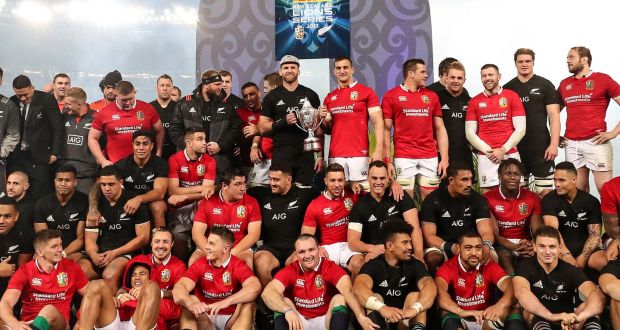
Image result for Lions 2017
It's not a popular thing to say but the
Lions in their role as the sport's main
mid-RWC showpiece event only helps
7 of the most established nations and
is a stifling thing from a global view

However just because there is no possibility of change doesn't alter the fact that this setup is not ideal for growing the game. The Lions tour is a much loved tradition from the amateur era that has survived into the professional era as a commercial beast off the pitch along with memorable games on it.

But this is also something that only involves and promotes the interests of 7 of the most established Unions from the sport's founding. Having that as the sport's main four yearly mid-RWC "jewel in the calendar" as opposed to something that would involve more nations is actually a quite stifling move from point of view of growing the game almost virtually anywhere outside those 7.

Unfortunately moving forward international rugby looks destined to stay in a system based on major tournaments outside RWCs being for the exclusive few along with fundraising friendlies which only work well if you are one of the big teams. It is hard to see any vision of productive change in the decades to come and this is something that will likely continue to limit rugby's growth as a more global sport.

Friday, 11 January 2019

Why has the 6 Nations now completely cut off Georgia at youth level?

Image result for Georgia u18  rugby ireland
Georgia U18 after beating Ireland in 2015
You may remember in the 2012-2015 cycle all the 6 Nations competed with the rest of Europe at U18 level in Rugby Europe (then FIRA) competitions. These were held in the usual format of divisions of 8 three matches per side.

Notably these U18 competitions were the start of Georgia's youth program bringing improving results. They notably got a win over Ireland in 2015 (after a couple years of near misses against them), and also beat Italy three times in 2012, 2013, & 2015.

However despite this being 6 Nations competing in a Rugby Europe competition, it was always clear who was deciding the rules. Even when the format had been that the bottom two teams had to playoff to reach the tournament again the next year. Yet when Georgia U18 beat Italy in 2012, the Georgians still had to go back to the playoff to qualify again anyway despite finishing outside the bottom two places. After they beat Italy again in 2013, they changed it so only the bottom team had to playoff.

In 2015 Georgia U18 came second beating both Ireland and Italy whilst Portugal U18 beat Scotland. This placed Scotland in the last place to playoff for their position, but we never got to see them to do so as following that with the Tier 2 sides as their strongest point in U18 rugby all the 6N teams quit.
Image result for Georgie u18  rugby
Georgia U18 pack down vs France

The one exception was France who still played with everyone else in the weakened remnants of the tournament. They also joined the others though in the "U18 6 Nations festival" in 2018 with a "France A side", and a "France B" side playing the rest of Europe and who were beaten by Georgia in the final.

Now for 2019 news has come that the French have gone too. This has now left Georgia completely cut off from any of the best teams in continent who they had been competing with better every year.

According to somebody who works at World Rugby "there are a variety of reasons" that 6 Nations decided to pull out of the competition with "the main one being the format was not the best for developmental purposes".

Yet this is odd and needs a bit more detail, as the format was three matches in a week, which is the exact same as their "U18 6 Nations festival". So what's the difference, why does the presence of the Georgians make it "not the best for developmental purposes" as opposed to not having them there?

Also it was already shown back in 2012 when they gerrymandered so that a 6 Nations team didn't have to playoff that the 6 Nations had all the power in the relationship with Rugby Europe. If there was a problem with the format they wanted changing, Rugby Europe doesn't exactly have the strength to get in their way. So the real reason for their departure remains a mystery, but it's not good especially for Georgia to be cut off from this competition, the experience either they, or the Iberians got against that level of opponent such as France was likely useful development moving up to U20.

On a related note Georgia also have also of course had wins over Ireland and Scotland at U20 in 2018 to go with their win over Italy in 2016. There had been talk of considering them for entry to the U20 6 Nations, and the Georgian Union even announced something along those lines shortly after hosting the 2017 U20 World Championship. Yet unfortunately absolutely nothing actually seemed to come of that announcement which suggests it was either done prematurely or by mistake.

Image result for fiji u20 new zealand
Even Australia and New Zealand play
Pacific Islanders annually at U20 level

At U20 level even the Pacific Islanders Fiji and Tonga have been able to play continental competition against New Zealand and Australia. Argentina U19 play an annual fixture against the South American U20 Trophy qualifier (usually Uruguay). However Europe, which has had eight of the top 14 teams in the world at U20 in the past three years, continues to shut its doors to those outside the 6 Nations.

This is an example of what is proving such a problem for European rugby's growth. We basically have the 6 Nations who are in practice the continent's governing body in terms of all the big decisions who have zero responsibility for the rest of the region. Rugby Europe who are left to look after the rest are utterly powerless against the 6 Nations in representing interests of other European nations.

Saturday, 22 February 2014

Clown of the week: Scott Hastings

image

As one of the ex-players asked about about Scotland's place in the 6 Nations tournament following the dismal defeat to England, in defending his home nation Scott Hastings went on a strange and ignorant tirade against the passion of Georgian support for their team.

Friday, 14 February 2014

Briefing: 6 Nations promotion and relegation

image

Following the recent media and fan discussion, here is a briefing on the chances of a promotion and relegation system being added to the leading international tournament in the Northern Hemisphere the 6 Nations.

Tuesday, 11 February 2014

How good were Italy in the 1990's compared to Georgia today?

,

A statement frequently made in regard to Georgia and the topic of 6 Nations expansion is that the Italians were much better at the time they were added to the tournament in the 1990’s. Here we explain why that statement is a highly dubious one.