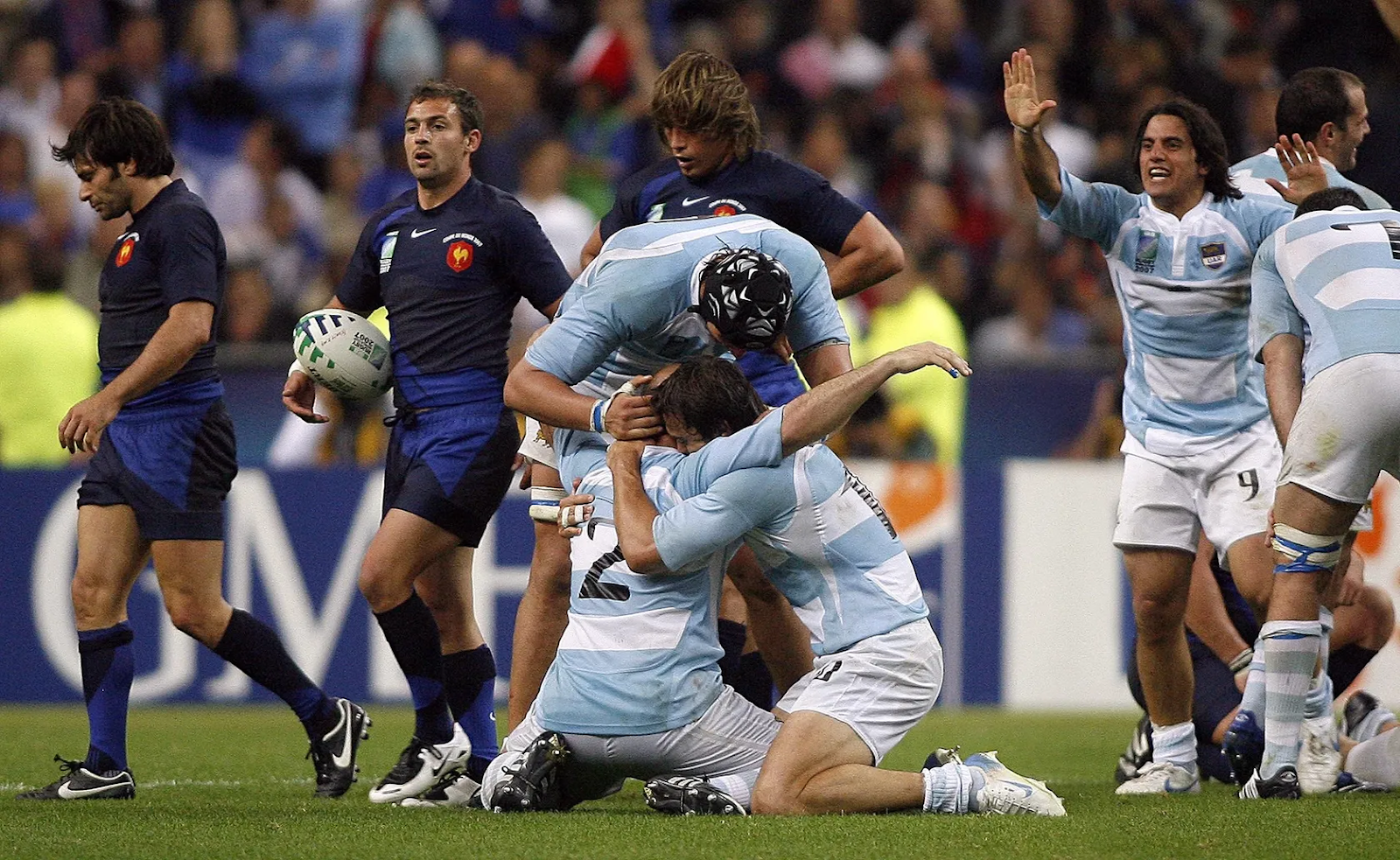
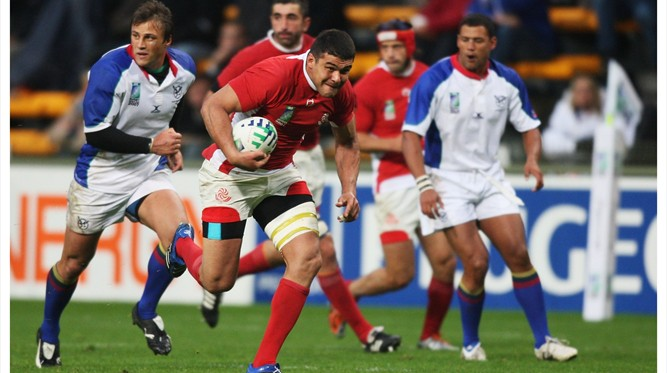
After going out of fashion for quite a while club vs country tour matches appear to be making a somewhat tentative comeback this November. South Africa have brought back a midweek team which will take on Munster and Bristol (although they are now branding the team only as "SA Select XV") and Chile will be playing Leinster.
These one off matches are noteworthy for managing to be both very interesting and also at the same time not particularly offering much insight.
They are interesting as they seriously challenge a widespread assumption held by many rugby fans. Namely the vast superiority of the level of international rugby over domestic rugby.
Club sides have often done considerably better in these contests than what most who have not followed the historical trends in these matches would commonly expect.
As you will see in the list we have compiled, one of the reasons these matches have become so rare over recent years is likely due to the frequency at which some major and minor embarrassments would occur for the national team (including some of the biggest).
There is the obvious caveat. Most (but not all) such matches tend to played with national teams fielding more experimental midweek selections in a more of a kind of training or pre-season mode. Although equally it should be noted in many of these matches the clubs are without their star internationals and not playing at full strength either.
Video: Suntory score late on to shock Wales on their tour to Japan in 2001
Nevertheless they still reliably produce some surprising results regardless. You would not expect a near full strength Uruguay to lose to a second/third string Cardiff side by a wider margin that they did against the full Wales team at the RWC a year later. Or the toughest match of the All Blacks November tour in 2008 to be a Munster side minus all their internationals. Or Samoa to beat Scotland in 2013 the week after losing 74-14 to the Lions. Or Romania to lead Scotland for 70 minutes at RWC 2011 after having lost to Fédérale 1 side Périgueux in their previous match.
Video: Munster vs All Blacks highlights from 2008
But whilst this raises an interesting question of whether people generally overestimate the degree to which a lot of international rugby is of a much higher level than a lot of club rugby. It is also obvious these games are nearly always truly terrible guides of the form and level that a national side is at.
Whereas an average of recent international test matches usually (but not always) give some rough marker of where a team at that moment maps onto the hierarchy of the sport. Club vs country matches leave you almost clueless as to where a team stands and often give very little predictive insight.
The most plausible explanation for some of the stranger club vs country results is probably in equal measure some large differences in motivation and preparation (average club players are generally much more excited to play a national team than vice versa) compared to a full test. Along with international rugby being to some degree put on too much of a pedestal next to club rugby (most of the leading club sides in "Tier 1" countries could compete with and challenge all the major national sides even if their average performance might be less intense due to attritional nature of a 30 match season).
From a "Tier 2" perspective there is some debate as to whether playing matches against clubs are a good idea as training to play "Tier 1". On one hand they can offer decent fully professional opposition for players, on the otherhand they can also offer embarrassment and a result that will leave you with zero mark of the level your team is at.
Anyway here is a run down of as many of the club vs country matches we could find that have taken place since 2000. Should these matches take place more often?
Video: Leicester defeat the Springboks on their November 2009 tour
SANZAAR
Argentina
Los Pumas narrowly escaped a loss to Worcester before RWC 2011 with a late 75th minute try, but otherwise have a very decent record in these games compared to most others. Of course they are one of the only major nations to have also played as a full national team in a domestic competition which they did playing as the Jaguares in Super Rugby between 2016 to 2019. Their overall win rate in Super Rugby was exactly 50% with 33 wins from 66 games.
2000: Reds (35-29)
2000: Waratahs (27-26)
2001: Counties Manukau (70-26)
2001: Thames Valley (26-12)
2007: Northampton (40-17)
2007: Leicester (41-21)
2011: Worcester (21-15)
2015: Leicester (55-34)
Australia
The Wallabies briefly revived a midweek touring side between 2006 to 2010. Losses to much understrength Ospreys and Munster sides saw them follow New Zealand and South Africa in axing the matches out of embarrassment.
2006: Ospreys (16-24)
2009: Gloucester (36-5)
2009: Cardiff (31-3)
2010: Leicester (26-15)
2010: Munster (6-15)
New Zealand
In November 2008 the All Blacks easily beat all four of the Home Nations without even conceding a single try, but in a midweek match against Munster (which was to mark the 30th anniversary of their meeting in 1978) they trailed most of the match and only avoided an upset with a late 76th minute try. They have not dared risk adding a club match to a tour since.
2008: Munster (18-16)
South Africa
In a RWC 2007 warm up the Springboks only led Connacht (back when they were really impoverished) 3-0 at half time and only pulled away in the final 15 minutes. A brief return to midweek tour games in November 2009 saw them lose to Leicester (featuring an 18 year old Manu Tuilagi on first team debut) and Saracens and they swiftly abandoned the idea.
2007: Connacht (18-3)
2009: Leicester (17-22)
2009: Saracens (23-24)
Six Nations
England
England like all the Home Nations traditionally played clubs on Southern Hemisphere tours throughout the amateur era. This changed as the pro era properly kicked off though and the last time they faced clubs was on their tour to South Africa in 2000.
2000: Leopards (52-22)
2000: Griquas (55-16)
2000: Valke (36-27)
Ireland
The only memorable thing about Ireland's two modern day club vs country matches was a controversy over Kiwi lock Mikaera Tewhata flooring Brian O'Driscoll with a big punch.
2007: Bayonne (42-6)
2011: Connacht (38-3)
Italy
In 2003 Italy went on a five match tour of domestic sides in New Zealand instead of playing any national sides. The tour did not go that well as they lost three of them and did not play another club side for 15 years until playing Yamaha Jubilo as a warm up before facing Japan.
2002: Manawatu (37-13)
2003: Southland (18-40)
2003: Counties Manukau (26-18)
2003: Bay of Plenty (30-33)
2003: Taranaki (18-13)
2003: Waikato (3-23)
2018: Yamaha Jubilo (52-19)
France
The sole occasion in the last 20 odd years France played a domestic side on tour they got a good 38-15 win over the Blues on an otherwise forgettable tour of New Zealand where they scored just one try in three tests.
2013: Blues (38-15)
Scotland
Scotland lost by an aggregate score of 74-20 to the Reds and the Waratahs on their 2004 trip to Australia. As we see so many times, this embarrassment was a cue to stop any more such games on future tours.
2000: Nelson Bays (25-25)
2000: Hawke's Bay (24-7)
2004: Reds (5-41)
2004: Waratahs (15-33)
Wales
Wales famously got shocked by Suntory Sungoliath on their 2001 tour to Japan. This embarassment was good reason to stop playing any more clubs on tours for a long while, before briefly coming back to the idea in the mid 2010s. After a 40-7 thrashing by the Chiefs in 2016 midweek touring matches were promptly shelved again.
2001: Suntory Sungoliath (41-45)
2014: Southern Kings (34-12)
2016: Chiefs (7-40)
Tier 2 nations
Japan
The last time Japan faced a club side was a midweek match in November 2013 where they were swept aside 40-5 by Gloucester. The Brave Blossoms have not played any more clubs as midweek touring games or World Cup warm ups since.
2010: North Harbour (19-23)
2013: Gloucester (5-40)
Fiji
Fiji last played a club team back on their miserable November tour of 2012 where they lost to Gloucester (who were keen organisers of such matches between 2009-2013).
2003: Brumbies (25-26)
2003: Reds (31-24)
2003: Marlborough (75-12)
2007: Albi (49-24)
2012: Gloucester (29-31)
Samoa
Samoa have played numerous domestic sides usually as World Cup warm ups although fewer in the last decade. The most startling result was in 2013 where they lost 74-14 against the Lions in South Africa. Over the next two weeks Samoa played some great rugby to beat Scotland 27-17 and Italy 39-10 and reach their all time World Ranking high of 7th. In contrast though they are also one of the only "Tier 2" teams to beat Premiership clubs, but on both occasions this was followed by somewhat disappointing RWC campaigns in 2007 and 2015.
2002: Pumas (26-21)
2002: Cheetahs (33-38)
2003: Waratahs (48-41)
2003: Reds (42-43)
2003: Cheetahs (45-51)
2003: Lions (34-32)
2003: Pumas (29-35)
2003: Northland (27-17)
2003: Auckland (16-21)
2007: Harlequins (21-22)
2007: Northampton (24-21)
2007: Sale (26-7)
2010: Connacht (22-26)
2011: Western Force (35-24)
2011: Western Force (37-10)
2013: Lions (14-74)
2015: Wasps (25-19)
Tonga
Tonga lost to Newcastle just a couple weeks before they recorded their historic away win over Scotland in November 2012.
2003: Reds (24-12)
2003: Brumbies (13-25)
2007: Edinburgh (26-14)
2012: Newcastle (13-24)
2015: Nottingham (69-14)
2019: Western Force (19-15)
Georgia
French clubs used to be the staple of Georgia's earlier RWC warm up campaigns. They faced five clubs beginning with the letter 'A' before RWC 2007 and lost them all. This appeared not to totally ruin morale though, as at the tournament they would overperform in pushing in Ireland to a 14-10 loss, keeping Argentina to 6-3 at half time, and dominating Namibia 30-0. Results that won extra government support to transform rugby in the country in the future.
2002: La Rochelle (13-18)
2002: Aurillac (?)
2002: Colomiers (34-48)
2002: Béziers (0-36)
2003: Biarritz (0-21)
2007: Auch (17-20)
2007: Agen (6-17)
2007: Agen (13-31)
2007: Albi (13-24)
2007: Auch (7-13)
2011: Aurillac (28-24)
2011: Bourgoin (28-15)
2015: Newcastle (7-27)
2019: Southern Kings (24-20)
Romania
In a curious bit of trivia. In the match before Romania so nearly shocked Scotland at the 2011 World Cup. They lost by 13 points to a Fédérale 1 side Périgueux.
2003: Narbonne (7-29)
2007: Neath (41-10)
2011: Périgueux (7-20)
2015: Yorkshire Carnegie (10-10)
2015: Edinburgh (16-31)
Canada
Canada buck the trend of "Tier 2" sides getting rather dismal results against club sides, then doing much better than you would expect from that result against international sides. In a 2015 RWC warm up they beat the reigning Pro14 champions Glasgow, but then lost to Romania (who had drawn with Championship side Yorkshire Carnegie in their RWC warm ups) at the tournament. In 2019 they also nearly beat European giants Leinster in one of the better "Tier 2" vs club results, but then suffered their worst ever RWC campaign (which their international results would have predicted but not that Leinster result).
2015: Glasgow (19-12)
2018: Coventry (35-12)
2019: Leinster (35-38)
USA
The Eagles midweek match with Saracens in 2010 was notable as it was where Northampton would spot Samu Manoa before he went onto become a club legend. The match with Munster in 2008 was also notable for it featuring a 17 year old rising talent Hanno Dirksen before being lost to USA rugby after Scott Johnson took him to Wales.
2000: Cross Keys (22-7)
2007: Munster (6-10)
2008: Munster (22-46)
2010: Saracens (6-20)
2015: Harlequins (19-24)
Uruguay
Uruguay at near full strength losing 45-21 to a second/third string Cardiff team was a bit of an embarrassment on their horrible November tour in 2018 (they also got slaughtered 68-7 against Fiji that month). Much of that same side a year later though at the RWC would beat Fiji and lose by a lower margin against the full Wales side.
2001: Newport (5-59)
2001: Neath (3-29)
2018: Cardiff (21-45)
2018: Ulster (5-21)
Namibia
Whilst their Welwitschias side that competed in South African domestic rugby rarely did well, Namibia scored two good wins over Southern Kings in their last RWC warm up campaign.
2019: Southern Kings (28-22)
2019: Southern Kings (21-17)
Portugal
Portugal's loss to London Welsh before the 2007 World Cup was notable for the hysterically ludicrous scaremongering over a match with the All Blacks being unsafe.
2007: London Welsh (16-19)
2007: Coventry (22-20)
2008: Connacht (11-27)
2008: Ulster (6-62)
Russia
Russia's record against clubs is a somewhat of a horror show. They played clubs ahead of both their RWC appearances and lost every single game, most by quite wide margins, with their defeat to Championship side Jersey in a 2019 World Cup warm up creating some humiliating headlines (there were rumours of the Bears not playing these games properly to avoid injury).
2011: Northampton (19-54)
2011: Dragons (12-40)
2011: Ospreys (19-46)
2011: Gloucester (7-47)
2018: Dragons (24-38)
2019: Jersey (22-35)
2019: Connacht (14-42)
Hong Kong
Hong Kong played and narrowly lost to the Dragons as a warm up to the RWC Repechage games in 2018.
2018: Dragons (24-28)
Brazil
Racing 92 on paper (featuring likes of Simon Zebo, Finn Russell, Juan Imhoff, Joe Rokocoko, Antonie Claassen, Donnacha Ryan) were probably one of the best sides Brazil has faced when they met in a pre season game in 2018. Os Tupis did well to keep it under 50 points.
Aurillac Espoirs celebrate winning the club's first ever national French title
Among the best news stories of the summer for "Tier 2" rugby was the triumph of Aurillac Espoirs. One of the lower budget Pro D2 (27th out of the top 30 French clubs last season), they sensationally against the odds toppled a number of the Top 14 big hitters to win the club's first ever French title.
This a major achievement. The Espoirs title over the past decade has been won the likes of Clermont (5 times), Montpellier, Racing 92, Bordeaux-Bègles, Perpignan, Toulon, & Toulouse. All those Top 14 sides can obviously attract far more of the top young French talent from smaller clubs. Yet Aurillac beat them all.
Aurillac's run in the knockout stages was thrilling. In the quarter final they beat Clermont 33-30 in extra time. In the semi final they came from 22-6 behind away from home to beat Perpignan (who had gone unbeaten in the regular season) 26-25 in the final kick of the match. In the final they were 23-10 down against the reigning champions Toulouse but finished strongly powering home scoring 27 points in the final 25 minutes to win 37-26.
This win for Aurillac though is also a big win for European rugby as a whole. As a small club in a region where the top talent gets hoovered up by their more powerful neighbour Clermont. It has led them to scouting the rest of the continent for recruits where bigger budget sides are not looking.
In their 23 for the final there were six Georgians: loosehead prop Irakli Mtchedlidze, hooker Basa Khonelidze, tighthead prop Nikoloz Kardava, back row Beka Shvangiradze, scrum half Mikheil Alania, & wing Dachi Papunashvili.
Also three Dutch: lock Skip Jongejan, flanker Tim De Jong, & centre Juun Pieters. Three other Dutch also played for them in the regular season. Flanker Hugo Huurman, scrum half Boris Hadinegoro, & full back Kai van Kampen. So did Russian prop Ivan Beskov and Spanish centre Dani Catanzaro.
There were also three French players with links to "Tier 2" nations. Lock Mosa'ati Moala is the son of former Tonga prop Mosese Moala, the other lock Mehdi Slamani made his debut for Algeria in July, and the wing Toni Maftei is the son of former Romania wing Valentin Maftei and has represented the Oaks at age grade level.
No other professional club in France has ever had so many players from Rugby Europe nations on their books.
The Georgians and the Dutch in particular also had very prominent roles in the Espoirs success. Juun Pieters was recognised as one of the leading players of the knockout rounds for his all round contributions both in attack and defence. Tim de Jong was a powerful presence and was one of the players to win a call up to the first team late in the season.
Tim de Jong powerful try assist in a 24-22 away win vs Racing 92
Papunashvili's match winning extra time penalty from 50 metres out vs Clermont
The all Georgian front row came of the bench to dominate Perpignan at scrum to win the match winning penalty. Irakli Mtchedlidze could be seen making huge charges around the park in the build up to tries. Basa Khonelidze strong impact in the final saw him named man of the match coming from the bench.
Mikheil Alania 50 metre individual try vs Clermont in the quarter final
In the off season Aurillac only signed two players to their senior squad against ten departures, and it is clear from their pre-season matches the club's management are now backing the best of this group for promotions to first team level.
Hopefully several of these players will go onto good senior careers, both for their club and country. Their success is important as it could also help influence recruitment at other French clubs who may then begin take more notice of Rugby Europe age grade tournaments and open up further opportunity for more young players to play professionally and qualify as JIFF in French rugby.
In any case as the Pro D2 season kicks off this week. Aurillac are without doubt the team any fan of Georgian or Dutch or any other "Tier 2" nation in general should be rooting for.
Can the Six Nations be persuaded to open their doors to expansion?
Over the past several years after a poor result for Italy in the Six Nations there has been discussion around promotion and relegation. Whilst this does shed some light on the obvious unfairness of the system for those shut out by the status quo. It is not either a sensible or realistic idea and it is time it gets forgotten.
The risk (albeit for most Unions it would be tiny) would pose to any Six Nations side would be huge. A large percentage of each Unions budgets is based on the income generated by the tournament. Relegation would be potentially ruinous. It is a total non-starter and if you suggest it they just will slam they door in your face.
Whilst it is true this also makes the Six Nations blazers utterly hypocritical, as they know how much worse off they would be in the REC, yet talk down to those in Europe with ambitions to join for not being at their level. It nevertheless is not a good idea from the perspective of the overall growth and competitiveness of the sport. The potential gains of the side being promoted would be cancelled out by the consequences for the one being relegated.
Instead those who want to the sport grow must focus on making the argument for expansion. The problem here is of course there is unfortunately there is not much sign the Six Nations blazers want to spend a second contemplating this idea either.
However if the chance they accept relegation rounds down to something like 0%. The chance of expansion, although also small, is surely a tiny bit better. Also even if something is unlikely, doesn't mean there is never any value of making the argument for it, and the discussion always needs to start somewhere. Meekly accepting the status quo will doom "Tier 2" forever.
The Pacific Islands have vocally campaigned in the media for various things that were not supposed to happen (All Blacks in Samoa, looser eligibility laws) and managed to win. They should be a model for European "Tier 2" to fight for their interests.
The actual problem is the Six Nations run the European game like the continent's governing body but without the responsibility to help anyone but themselves. So pointing out that it would obviously help the sport grow enormously isn't enough. You need to make the case it will benefit "Tier 1" too and try address their biggest problems. So this a first draft attempt to think of ways of giving it some appeal to them and open the door maybe just a little.
The format
If the initial expansion is to 8 teams. The format would be two pools of 4 teams. It would be necessary to ditch the round robin league format with expansion as there is no room in the calendar to expand in that way.
The two pools could look something like this:
Pool 1: France, England, Italy, Georgia Pool 2: Ireland, Scotland, Wales, Spain
This would be followed by a round of semi finals, bronze final, and grand final. To keep all teams maintaining revenue from five matches it would also require ranking matches from 5-8.
To avoid scaring the Six Nations. The proposal would be for this expanded format to take place only once every four years in between RWCs (like football's European Championship).
The first monster hurdle to overcome
Will attachment to the traditional Six Nations clashes forever block any hope of rugby's growth?
Immediately this plan will be met with a monster hurdle. A year without a "traditional" annual fixture like the England vs Scotland Calcutta Cup clash will seem utterly unthinkable to many in the Six Nations.
It is hard, but unfortunately this is something that the sport has overcome. If you follow through the line of thinking that an England vs Scotland or England vs Wales match has to happen every year as part of the tournament and that is non-negotiable. Then it will be simply impossible for the tournament and the sport to ever grow. Only a round-robin can guarantee these fixtures and that format cannot move beyond six teams. If the sport can't get beyond this point then we may as well give up any hope of rugby ever becoming significantly stronger on the continent.
Already suspect many in Six Nations tempted to slam the door shut again. But would note a couple of things. The added England vs Georgia match to the tournament would be of far more commercial value as part of a big event than in a friendly (remember Ireland vs Romania set the RWC record attendance in 2015). Whereas the "traditional" fixtures like England vs Scotland could always be replaced and sell equally well as standalone friendlies. So they could still have all their "traditional" rivalries and make just as much money from them, but also gain more than they would otherwise from the "Tier 2" fixture.
Also remember. In football there was an annual England vs Scotland fixture for 117 years up to 1989. The sport did not crumble going a year without it. There are other interesting matches and rivalries to make if more teams were allowed to grow.
The losing 5th/6th nation
Whilst it might not be so bad for the top four sides who reach the semi finals, for the 5th or 6th placed of the Six Nations, it would see a reduction in their level of fixtures with them playing two "Tier 2" sides. Admittedly this may be a hard sell (even though to repeat they can still organise the historic matches which would still sell well as friendlies).
But at least it is not nearly as hard a sell as the idea of promotion and relegation where a Six Nations side would in theory be exposed to risk of dropping out of the tournament completely.
Also we need not forget to think not just of the present but the future. A side like Spain coming up could bring big crowds and grow significantly with the benefits of inclusion. The atmosphere and vibe around the games as part of a big event should make the "Tier 2" games a lot more exciting for "Tier 1" an standard friendly.
Many "Tier 1" fans do not respect the REC (as seen by various predictions prior to Italy vs Portugal or Georgia this summer) but these sides have worked hard to improve and with increased resources available could be more competitive quicker than some think. It is not as if we are asking to consider sides who would frequently ship 60 points.
Rugby World Cup seeding bonus
Another concern is the tournament could fail to carry the big event if it seen as pointless. If held once every four years, with ordinary Six Nations still being held in other years, it would risk carrying little prestige when it is clearly harder to win the round robin format.
RWC seeding could add increased importance to the tournament
One possible good remedy for this is attaching RWC seeding. Instead of the silly current method of basing the seeding on a snapshot of the rankings 3 years out. If this European tournament saw sides competing for seeding then all sides would be at 100% for it and the matches would increase with importance and intensity as a result. This would help it keep the vibe of a big event, and justify it as worth having once every four years as something slightly distinct and special than an ordinary Six Nations.
Obviously this would require both Six Nations and World Rugby to agree to this. But there has long been a missed opportunity to add more intrigue and tension to some mid-RWC matches if WR put RWC seeding directly at stake.
More revenue from "Tier 2" matches in tournaments than friendlies
Ireland vs Romania set the RWC attendance record at Wembley at far from cheap ticket prices. If the tournament managed was promoted and marketed in a way that created the same big event feel around as in RWCs. There would be little to fear in terms of revenue loss from those matches.
More matches to sell to TV broadcasters
Another point mentioned in the previous article. The tournament would also see an increase from 15 to 20 matches (whilst not adding more weekends). This would create more content to sell to TV broadcasters and more possible exposure for sponsors in more markets.
The potential pay offs from long term growth
In spite of the Six Nations undoubted success. It still has recently struggled to attract a title sponsor at the asking price. Opening the door to new markets could increase its visibility.
Finally it is important to repeat of thinking of the long term not just the present. Including sides like Georgia and Spain would allow them substantially more extra room to professionalise and improve. Both could also surely fill football stadiums if given a chance in an expanded Six Nations and bring excellent atmosphere and added colour to the tournament.
In addition opening the door to expansion (presuming qualifiers for the two new places) in the much longer term could also attract more sponsorship and investment in other less rugby oriented places like Germany if they saw the door was held open.
South Africa at the U20 Summer Series opened up a place for Georgia to compete at the tournament
This is not something ideal as it removes a place for an REC team and also means the tournament is no longer European. But if the Six Nations were to add South Africa though like they are adding them to everything else their presence would remove any issue around reduced standard in the immediate term if that is the biggest problem. This move would at least open one place to an REC side (as seen at the recent U20 Summer Series) and one place is better than none.
First steps
Whilst accept it is a long shot to ever persuade the Six Nations to open up. Hopefully more articles like this can be the first baby steps to at least getting expansion some sort of hearing and start to create momentum for some change. It would be good to hear journalists start pressing the Six Nations blazers about the positive case of a rising tide lifting all the boats up with expansion and not the more negative case to bring Italy down with promotion and relegation.
Even if the idea of expansion sounds unappealing or not quite ready right now. Hopefully some will start thinking about it as a concrete goal to be achieved in the not too far future.
Even if the big goal remains a way off. Hopefully the idea of expansion being more widely discussed can at least perhaps lead to some smaller concessions from the Six Nations which would help the sport grow. For example one being the inclusion of Georgia and Portugal/Spain to the U20 Six Nations.
If you have any other good ideas of how the Six Nations can possibly be persuaded to consider expansion in the rest of Europe. Leave them in the comments below.
One may look at Italy and their results over the past 9 years and ask "How has being in the Six Nations helped them? They constantly lose". It is not often you see this point made, but in actual fact Italy has benefited MASSIVELY by being added to the Six Nations.
To understand this properly you need to think of the counterfactual where Italy were ignored by the Six Nations and remained a "Tier 2" side in the REC. In this hypothetical world all the following things would have most likely been different:
They would not have the annual budget of all the top five REC sides Georgia, Romania, Spain, Portugal, & Netherlands combined.
As a result not had the money for professional teams in the URC.
More often played at far smaller stadiums with far smaller crowds.
Not had the money to invest so much in improving what was a weak youth system.
Nor the regular international competition for that youth to test themselves.
Nor would they have the full 3 votes on the World Rugby Council.
Selection would have less consistency and involve more negotiation with clubs.
Nor would have they been able to select anywhere near the level of foreign imports and heritage players they have managed to get available over the years (over the 2003-2013 period this was a high percentage of their most significant players).
It is true Italy's wooden spoon collection has hardly made them the ideal example of how entry to the Six Nations can grow the sport. But that is only if you ignore what the Six Nations prevented them most becoming: a mid-table REC side probably 5 or 6 places lower in the rankings than they are today and without the ability to invest so much in improving youth.
The more you think about this. The more totally obvious it becomes. Of course Italian rugby is much better and richer than it would be otherwise outside the Six Nations. It is for this reason any suggestion they voluntarily put their place at risk in a relegation playoff is a non-starter.
Despite many losses Italy's participation in the Six Nations has still boosted their level immensely.
Sadly for the sport though few appear to have properly understood this and been able to follow the logical implications of how spreading some of those same benefits of the Six Nations to others would grow the game on the rest of the continent. Instead after every bad result over the last 8 years we have more often heard useless talk of kicking Italy out of the Six Nations (a truly terrible idea that would risk setting them back years).
Instead what they should be thinking is: "Georgia and Portugal are pushing Italy hard to close and exciting competitive games despite having only a fraction of their budget. Imagine how much more they could grow if the Six Nations opened its doors and they were able to get considerably more funding and experience".
Also: "Spain got a crowd of 40,000 for an exhibition game. There is huge growth potential there. Imagine how much stronger they could be with the budget to maintain a more consistent selection and retain homegrown players like Lucas Paulos and Samu Ezeala. Plus add heritage players the level of Joris Segonds or Rémy Baget like Italy has always been able to do with the likes of Parisse and Castrogiovanni, or in more recently Polledri and Capuozzo".
Lamentably though it is doubtful any thoughts along those lines crossed the mind of a single one of the Six Nations blazers this summer. And that is why the sport struggles to grow.
Georgia and other REC nations compete with a fraction of the budget of Italy and other "Tier 1".
Instead of encouraging and inviting growth. The vague alternative idea seems to be that "Tier 1" plays "Tier 2" occasionally in friendlies. And for a team like Georgia to ever join the Six Nations they must follow the same model as Italy and work their way into the tournament through a few wins in those friendlies until they can no longer be ignored (it is sort of the libertarian "pull yourself up by your bootstraps" line of thinking).
This idea basically means Georgia (or any other REC side) is asked to beat Six Nations sides despite having a fraction of the budget, a fraction of the professional player pool, a fraction of the top level experience, and those occasional matches when they happen most often being played away from home.
Unfortunately some clueless people think this is the best and most efficient way to grow the sport. Instead of expanding the Six Nations and enabling them to build a better budget, player pool, and experience to be able to compete. They are asked to perform a miracle only possible with a one off "golden generation" (which would then be wasted as they'd have spent entire careers playing those friendlies and be retired by the time they ever got into the tournament).
When discussing Georgia and the Six Nations. You will commonly hear something along the lines of "yeah, they should get chance of some more "Tier 1" games, but not the Six Nations". Whilst on the surface this may sound supportive, in reality it maintains the vastly uneven playing field and is basically just fobbing them off. Anyone who repeats that line with no plan of Six Nations expansion attached is not genuinely serious about growing the sport.
Expecting teams to repeat Italy's early professional era wins over Five Nations sides is unrealistic and ignorant of how international rugby has changed.
(Note: The comparison to Italy c.1997-98 is utterly flawed for another reason. In those barely just turned pro years of the sport. Scotland (at home) could lose 68-10, France (at home) could lose 52-10, and Wales could lose 96-13 versus South Africa. Ireland (at home) could lose 63-15, England could lose 64-22, and Argentina could lose 93-8 versus New Zealand. Never in the history of the sport was the gap between 5N and SANZAR bigger. Nowadays the international landscape is totally different. It is simply not a fair comparison for example to compare Georgia playing Ireland in 2022 to Italy playing Ireland in 1997).
Expansion can be in the interests of "Tier 1" too
Obviously expansion to the Six Nations should be in the interests of every REC nation and anyone who genuinely cares about growing the sport (a lot of fans may say they do but when it comes to applying the necessary changes needed very clearly don't).
But there is another reason why expansion and involvement of "Tier 2" in big events ought to be in the interests of "Tier 1" instead of just playing "Tier 2" in friendlies.
Anyone who has followed rugby long enough should know vaguely supportive promises of "more games for Tier 2 between World Cups" are far from reliable. In 2017 World Rugby pledged to increase "Tier 1 vs Tier 2" matches by 39% over 2020-32. However pretty much the status quo remains (four SANZAAR sides play four of the Six Nations sides on a July/November weekend with the two left over Six Nations playing a "Tier 2" nation).
Reason for little change is obvious. Those friendlies are on some level fundraisers. The biggest draws are the biggest brands (ie All Blacks). When it comes down to it, no "Tier 1" side is volunteering to play two rather one "Tier 2" side in November. For matches involving less established teams to attain high commercial value it requires attachment to a big brand event.
A perfect example of this is the last three matches between Fiji and Uruguay. Despite being one of the lower profile games shifted to midweek, in 2015 and 2019 the fixture sold out stadiums in both Milton Keynes and Kamaishi which were broadcast to global audiences on TV. By contrast in 2018 they played a November friendly at Hartpury College and the crowd was in three figures and only streamed on YouTube. Many of those fans did not come for Fiji vs Uruguay specifically. They came to see the RWC.
Ireland vs Romania sold out Wembley to set the record crowd of 89,267 for a RWC match.
Similarly in 2015 when we saw Ireland vs Romania sell out Wembley to set the RWC attendance record of 89,267. It was not Romania that were a huge draw per se. Again it was the RWC as an event that sold.
The Six Nations as an event has a similar effect in selling the matches involving a somewhat lower profile team in Italy. We can see this by comparing the fixtures involving Italy in the Six Nations and the exact same fixtures when played as friendlies in RWC warm ups.
2003 RWC warm ups:
25,000 vs Scotland in Edinburgh (20,000 fewer than previous fixture in the Six Nations)
14,000 vs Ireland in Limerick (35,000 fewer than previous fixture in the Six Nations)
2007 RWC warm ups:
14,000 vs Ireland in Belfast (35,000 fewer than previous fixture in the Six Nations)
2011 RWC warm ups:
20,000 vs Scotland in Edinburgh (22,000 fewer than previous fixture in the Six Nations)
2015 RWC warm ups:
10,000 vs Scotland in Torino (56,000 fewer than previous fixture in the Six Nations)
43,000 vs Scotland in Edinburgh (19,000 fewer than previous fixture in the Six Nations)
52,000 vs Wales in Cardiff (14,000 fewer than previous fixture in the Six Nations)
2019 RWC warm ups:
30,000 vs Ireland in Dublin (21,000 fewer than previous fixture in the Six Nations)
25,000 vs France in Paris (25,000 fewer than previous fixture in the Six Nations)
50,000 vs England in Newcastle (32,000 fewer than previous fixture in the Six Nations)
Some of those crowds are good (50,000 in Newcastle or Cardiff). But still on average across those 10 friendlies Italy games sold 28,000 fewer tickets per match at presumably lower prices and lower TV rights than they did in the corresponding Six Nations fixture. The largest effect is seen in Italy itself, who attract far better numbers for the Six Nations than friendlies.
To be fair "Tier 1" Six Nations sides (besides Italy) get quite healthy crowds these days hosting their annual "Tier 2" fixture in November, but those matches are still obviously of much higher commercial value as part of big events than friendlies.
If the Six Nations would be willing to think long term there is also the larger potential future pay off in creating more competitive teams with bigger fanbases, and having a tournament with more matches to sell, which allows for more possible exposure for sponsors and larger TV deals. The modern day RWC has grown more lucrative as an event for these reasons and Six Nations could too. "Tier 2" growth should not have to come at expense of "Tier 1".
Conclusion: Six Nations has huge potential power to grow the sport in Europe that it is wasting. As seen at the RWC, most growth comes from expanding major tournaments, not from friendlies.
"Tier 1" blazers take the view that the big mid-RWC events must ultra exclusive to themselves, and they will "grow the game" with the odd friendly. This gets it totally back to front.It is the big events that make the biggest impact in growing the sport and should aim to be inclusive. Then you can leave sides to organise friendlies and three match test series mostly as they please.
For rugby to grow, and one day fully shed its "Tier" tags, it is crucial that its administrators open their minds to the idea of expansion of the major mid-RWC event. There are huge potential gains to be made throughout the continent from an expanded European Championship event (maybe once every four years similar to football). Especially for all those labelled "Tier 2" of course, but long term also "Tier 1" as well.
It is incredibly frustrating the Six Nations with their total lack of vision and desire for growth fail to see this. European expansion should be seen as a great opportunity for the sport, where unlike the USA there is a more open niche available for full contact team sport, but it gets ignored and wasted as "Tier 2" sides remain asked to compete at enormous financial and competitive disadvantages in perpetuity. Rugby has to look at where successful examples of growth have come at RWCs and apply those lessons to their other major events.
Video: Everything Georgia captain Merab Sharikadze says here is spot on. "Rugby must be more open".
Major changes to the hierarchy of international rugby generally occur at a glacial speed. However it is worth looking at some of the biggest success stories of where increases in growth and popularity have happened outside the "foundation Unions" (made up of the old Five Nations and Tri Nations) from over the past 20 or so years.
A common theme in each of these examples is that every single one illustrates the pivotal role the World Cup has had in driving of the sport's growth and expansion in new areas.
Argentina (1999 & 2007)
Argentina, just like most of the Five Nations, suffered their record heaviest defeat in the early professional era period (where SANZAR professionalised earlier) when in 1997 an amateur side got thrashed 93-8 by New Zealand. It was obvious mostly amateur players would no longer compete with these teams.
Fortunately though a special generation of Argentines born 1973-77 would all emerge at roughly the same time and form the core of the team for the next three World Cups. (Agustín Pichot, Mario Ledesma, Felipe Contepomi, Rodrigo Roncero, Martín Scelzo, Ignacio Fernández Lobbe, Gonzalo Longo, Diego Albanese, Ignacio Corleto, Manuel Contepomi).
Prior to 1999, Los Pumas had disappointingly only won 1 out 9 of their previous RWC games (vs Italy in 1987). This generation changed that. Upsetting Ireland to reach the quarter finals for the first time and firmly putting Argentine rugby on the world map. In the 18 months or so afterwards, the squad was transformed from only having two or three professional players to nearly an entire team playing at a high level in France or England.
Argentina shock France in the opening game of RWC 2007
That first stage of growth led to the second stage when a more experienced team showed up at RWC 2007 and did even better. In a "pool of death" with #1 and #2 of that year's Six Nations, Los Pumas shocked France in the opening game of their home World Cup, then swept aside Ireland to top the pool, and went onto reach the semi finals and win the bronze medal.
Argentina had achieved some big results before (they had beaten all the Six Nations over that four cycle including an away win at Twickenham). However it was this World Cup that captured the public imagination of the country like never before. It was in this tournament this generation confirmed a legacy for future growth.
This is shown today by how the sport has spread across the country. In 2007, 26 of the 30 man squad were from Buenos Aires. Now 13 of the 23 that beat the All Blacks, and all 7 try scorers in their recent record win over the Wallabies, were from other parts of the country. Both those matches were in the Rugby Championship, where the overdue Argentine inclusion was another legacy from that generation's achievement.
There was a buzz of excitement in the Georgia camp last week as they rounded off their final training runs at La Grande Motte on the shores of the Mediterranean in southern France.
At last, the 30 members of Georgia's World Cup squad were to receive their first official piece of equipment: tracksuits, paid for by their coach, the Frenchman Claude Saurel, and the other team officials, who had all chipped in to ensure that the players would have at least one piece of equipment in common before they arrived in Australia.
The former Béziers coach and Languedoc winegrower has also forked out for a video camera, computer and tape machine in an attempt to replicate the sophisticated analysis systems now used by major international teams.
"We are light years behind teams like England or France but we realise there is nothing much we can do about it," confided Gregoire Yachvili, the Georgian flanker whose brother, Dimitri, is the scrum-half for France.
"There is no point in our getting obsessed by the logistical and financial difficulties; we just have to get on and do our best. We might not have any tackle-bags, we have no body armour and we have to borrow a scrum machine, but we've got a ball, we've got a pitch to play on, and two teams of players... What else do you need to train for a game of rugby?"
Even more disastrous for the Georgians has been the ad hoc nature of their build-up. A training camp in the mountains of Georgia and a two-match tour of Canada were reluctantly cancelled in July for financial reasons.
At this point Georgian rugby had almost nothing but got by just from natural talent and predisposition for the rough and tumble of the sport along with the helpful generosity of coach Claude Saurel (who used his contacts to first open the doors for Georgian players to play in France - initially in lower leagues but gradually more in higher teams).
Georgia powering to their first RWC win in 2007
Still going in to RWC 2007 there were reports of only eight pitches in the country. But this tournament was a turning point where they most famously came ever so close beating Ireland (indeed they really should won that match). They were also only 6-3 behind vs Argentina at 45 minutes, and resoundingly recorded their first RWC win 30-0 vs Namibia.
It was after this the Georgian government and politicians took notice and started to support the side. In particular from 2008 the Cartu Foundation started investing heavily in improving infrastructure. This enabled the new generation of young kids inspired by Gorgodze to play the sport to enjoy facilities a world apart from what the earlier players in the 2000s had.
The result is Georgia is now one of the leading producers of young talent outside "Tier 1", and have established themselves as the top side of the REC, with a far stronger, more skilled, and professional group of players many of which now star in Top 14 or Pro D2.
Portugal (2007)
Heading into their first World Cup back in 2007. Portugal were supposed to be the exemplar of a team World Rugby wanted to boot out as they planned to cut the tournament back to 16 teams for 2011.
In the end whilst they did suffer the largest defeat of that tournament (108-13 against a ruthless all time great All Blacks team), the team won over many spectators with the passion and heart they showed despite their limitations, and their fans in the stands never stopped cheering for them throughout the match. Every single Portuguese player and staff still reflects back on the match as an amazing experience.
Also despite being given least rest time of any team in the tournament they competed above expectation in other matches. They were only 16-5 down to Italy after 65 minutes before fading and conceding two late tries, and led Romania for 71 minutes before losing 14-10 to another late try.
They defied those predictions of how their matches could be "an embarrassment for rugby" and many fans enjoyed watching them play and now argued in favour of keeping sides like them in the tournament. More importantly, their efforts also led to an immediate surge of interest in the sport at home, with large numbers of more kids turning up to play.
Although in the following years they dropped down the rankings, reaching a low in 2016 with relegation from the REC, the legacy of that 2007 World Cup team lived on. As around 10 years later many of those kids who were inspired to take up the sport around that time became part of the growth of Portuguese youth rugby which started performing well above its senior ranking and nearly reaching promotion to the U20 Championship.
A number of those U20 players from 2017-19 were quickly promoted to the senior team, and along with some added French experience, now form the basis of one of the most exciting young teams on the "Tier 2" scene, and who in the past year have nearly upset Japan, Georgia, Italy, and were within 10 seconds of qualifying directly for the RWC ("nearly" is a word they will be so desperate not to hear again this November in the Repechage).
Japan (2015)
The interest in Japanese rugby had long dwindled in the modern era. When in 2009 they were awarded hosting rights to the 2019 World Cup, there was some concern about whether they could fill the grounds for all the smaller matches. Unless a "Tier 1" team came to visit (which was rare - Japan did not host them a single "Tier 1" test between 2005 and 2013), crowds were usually very modest for their usual Pacific Nations Cup matches.
The moment that changed Japanese rugby forever
Then everything changed in September 2015 when Japan shocked the world with the biggest upset in World Cup history against the Springboks. After many years of humiliation against the leading teams on the big stage, Japanese rugby became an overnight sensation and interest instantly boomed with the Brave Blossoms matches attracting some huge TV viewing figures.
A hypothetical win over South Africa in a friendly outside the World Cup would have been equally shocking, but the magnitude of the enormous effect it had on the Japanese public was so much more for the result coming at the sport's showpiece event when the entire world's attention on that match.
If you ever play the match of your life and stage a monumental upset. It is always best to do it on the world stage with every rugby fan watching. One huge match at a World Cup can change everything and leave a legacy.
Not everything has necessarily been perfect in capitalising on that success. but regardless the level of interest remains miles above what it was before 2015 and that momentous match in Brighton, and in the end nobody needed to have worried about the World Cup as the Japanese crowd enthusiastically packed every stadium for every match.
The impact of this match (followed by the repeated heroics at their home RWC four years later) could still be felt more further down the road if the increase in young kids inspired to start rugby as a result of it later brings its benefits to senior level.
Uruguay (2015)
Uruguay's win over Russia in 2014 has ended up being significant for all of South American rugby
Uruguay reached the World Cup in 1999 and 2003, but it was their return to the tournament after defeating Russia in 2014 that led to major growth and change to the sport in the country. Indeed that match in Montevideo may be one of the most significantly important matches in South American rugby history.
Heading into RWC 2015 they proudly talking of their amateur status. Afterwards, with the unlocked funding and ambition they gained from the tournament, they launched a new era under coach Esteban Meneses.
This involved leading players signing up to a more professional High Performance system and better schedule of matches. Although it was not all plain sailing (they had miserable November tours in 2016 and 2018), they arrived at the 2019 World Cup a far better prepared outfit having qualified without needing to go through the Repechage and beaten all the four national teams in the now defunct Americas Rugby Championship that year.
Los Teros played three of the same opponents (Wales, Australia, Fiji) in 2019 as they did in 2015. In every match they were more competitive than they had been four years earlier. Improving from an 166-27 aggregate score against them to an 107-53 aggregate score. This of course included their all time best ever result with the upset vs Fiji.
That improved level Uruguay showed in 2019 would never have been possible if they hadn't qualified beating Russia in 2014 first. Their success then added to the entire South American rugby ecosystem and with that came another bonus bit of growth as well.
If Uruguay didn't reach RWC 2015 it is far less likely the new South American domestic league SLAR would have launched in 2020, and if that league had not launched it is likely Chile would never have been able to obtain a more professional High Performance system of their own, and without that their defeat of the USA to become the biggest surprise qualifier in recent World Cup history would not have likely been possible.
USA (1999-2019)
This case is a bit different to all the others mentioned here. USA Rugby is far from at its highest point, and cannot be said to have made the level of progress some may have hoped. There is a good chance they may even not qualify for the World Cup next year.
Would USA's historic win over Scotland have happened if they had missed RWCs for over 20 years?
However they are still a success story of the World Cup in that it has prevented decline as much as helped growth. To understand this you need to ask yourself a counterfactual. What would the state of USA Rugby look like today if the tournament had never expanded and remained at 16 teams and Canada kept the Eagles out of the event for over 20 years? (2019 was the first time USA beat Canada to take the Americas qualifying spot).
My guess is that they would probably be about several years behind where they are now. The Major League Rugby project would be not yet be in existence. Nor would have they got that historic win over Scotland in 2018. And probably can forget about the plan for them to host the World Cup in 2031. Rugby League may have even seen an opportunity to attempt targeting them as a region where Union was weaker.
(Similarly when looking at Italy in the Six Nations. They may not have been great, but in the counterfactual world where they were ignored by the Five Nations like Romania in the 1980s, they would have likely fallen to the level of a mid-table REC side and had none of the money to invest in improving their youth which now so looks to promising for a brighter future).
Some have hypothesised World Rugby expanded to 20 teams in 1999 to keep the USA involved after were left out for the first time in 1995. There are no direct quotes saying this was the reason, and there were plans in the 2000s to reduce the format to leave them out again, but if it was the reason it was a sensible one. Now there is a speculation among fans if them missing out again in 2023 will lead WR to hurry up and increase to 24 teams for 2027 not 2031.
Conclusion: RWC is the key driver of the sport's growth and must be understood as investment for the FUTURE not the just the present
Nothing else over the past 20 years has been as consistently proven to significantly grow the sport outside the old Five Nations and Tri Nations sides as the World Cup.
The most important lesson to learn though is the Rugby World Cup is about the future as much as the present. This is relevant to today's discussions over potential expansion to a 24 team tournament.
Portugal vs Georgia this year would have likely been of a much lower standard if the short termist RFU had gotten their way and cut them both out of RWC 2007
We can now see just how disastrously short termist those plans were. If the RFU had won that bid and enacted their plan neither Georgia or Portugal would have been at the 2007 World Cup. The investment since 2008 in Georgian rugby simply would not have happened. Some of those kids who took up rugby in Portugal and now are playing such good rugby for the national team may have never picked up the sport.
Similarly if they reduced to 16 teams Uruguay would have never qualified in 2015. Much of their progress over the next four year cycle would not have been possible, nor the improvements that spilled over to Chile over this four year cycle.
Even some of the sides that did still reach World Cups may have been negatively effected as the entire "Tier 2" global rugby ecosystem would have been weakened. A side like Japan would have still qualified, but their preparation for each tournament would have suffered from several of their opponents having made less progress.
Thankfully improved performances from "Tier 2" in 2007 changed minds on this issue. Not many talk of reducing to 16 teams any more, but now World Rugby remain wary of increasing to 24 teams for same reasons they were constantly thinking of cutting back to 16 in the 2000s.
It is true that total wipeouts are not desirable and you don't want to see too many. But fans and administrators also need to understand short term pain for long term gain. Georgia needed to first play 2003 to be the side that recently thrashed Scotland at U20 level. Portugal needed to play 2007 to be the exciting team they are today. Uruguay needed to first play 2015 to be more competitive in 2019 and Chile needed that to qualify for 2023.
Stories of growth like these are why World Rugby should stop being overly cautious about increasing to 24 teams for the 2027 World Cup. The tournament is the vehicle that has produced most of the sport's growth over the professional era and they have to think about expanding for the potential pay off in the future and not solely focus on the present.
 Argentina
 Australia
 New Zealand
 South Africa
 England
 Ireland
 Italy
Italy France
 Scotland
 Wales
Wales Japan
Japan Fiji
Fiji Samoa
Samoa Tonga
Tonga Georgia
 Romania
 Canada
 USA
USA Uruguay
 Namibia
 Portugal
 Russia
 Hong Kong
 Brazil

.gif)
.gif)
.gif)